She Owed Everyone and Owned Nothing — Then She Built a Fashion Empire From the Ashes
The Day the Numbers Stopped Making Sense
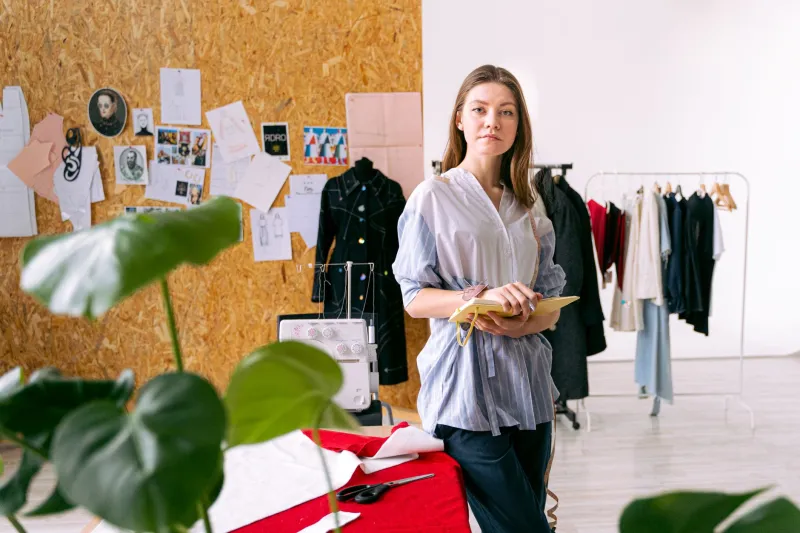
Elena Castillo remembers the exact moment she understood it was over. She was sitting in a lawyer's office in downtown Chicago, staring at a spreadsheet that showed her company — seven years of her life, her savings, her mother's loan, her ex-boyfriend's goodwill — was worth less than nothing. The debt was $2.3 million. The assets were a sewing room in Pilsen, a half-finished spring collection, and a brand name nobody outside of regional boutiques had heard of.
She was thirty-four years old. She had been called a rising star. She had been profiled in two regional magazines. She had believed it.
"I thought the press coverage was the same as the business working," she said years later. "It wasn't. It was just noise."
Bankruptcy filings are public record, which is its own particular cruelty. Her suppliers knew within days. Her employees — twelve of them — found out before she'd figured out how to tell them. The boutiques that had stocked her line quietly stopped reordering. The rising star had burned out fast and publicly, the way they sometimes do in industries built on image.
What happened next is the part worth telling.
What Bankruptcy Actually Forces You to Do
There is a version of the bankruptcy story that is all about shame and rock bottom and the dramatic comeback. This isn't quite that story. Castillo doesn't talk about her lowest point in cinematic terms. She talks about it the way someone describes a very cold shower — unpleasant, clarifying, hard to stay in but impossible to ignore.
Chapter 11 bankruptcy, the restructuring kind, requires something most entrepreneurs never do voluntarily: it forces you to sit with a trustee, your creditors, and a federal court and explain, line by line, why every decision you made was wrong. It is, in a strange way, the most honest business education available in America. And it costs you everything you have to enroll.
"They made me go through every purchase order, every contract, every vendor relationship," Castillo recalled. "And I kept seeing the same problem. I was paying too much for materials I didn't understand, from suppliers I'd never visited, to make clothes that fell apart in two seasons."
The fashion industry runs on this model. Fast production, thin margins, high volume, planned obsolescence. Castillo had been trying to compete in that system with a small operation that didn't have the scale to survive it. She hadn't failed because she was a bad designer. She had failed because she was playing someone else's game.
In the forced stillness of the restructuring process — which took fourteen months — she started reading. Supply chain management. Material science. The emerging literature on sustainable production that, in the early 2010s, was still mostly academic. She started calling manufacturers she'd never considered because they were slower, smaller, and more expensive per unit.
She started asking different questions.
Building Slower, Building Right
The company that emerged from the bankruptcy process was almost unrecognizable from the one that had entered it. Gone was the seasonal collection model, the trend-chasing, the wholesale dependency on boutiques that could drop her on a buyer's whim. In its place was something leaner and, frankly, weirder: a direct-to-consumer brand built around natural fibers, domestic production partnerships, and a pricing model that was honest about what ethical manufacturing actually costs.
The clothes were more expensive. The collections were smaller. The marketing was blunt to the point of being uncomfortable — one early campaign literally showed the cost breakdown of each garment, line by line, the way the bankruptcy trustee had once shown Castillo her own failures.
Retailers thought she was insane. A few early customers thought the transparency was a gimmick. But something about the honesty worked. In a market saturated with brands performing ethics while quietly offshoring production, Castillo's operation — now called Groundwork Studio — was doing the math in public.
Within three years of relaunch, Groundwork had a waiting list for its core pieces. Within five, it had been cited in three separate congressional hearings on sustainable manufacturing as a model for small domestic producers. Within eight, it was generating revenue that made the original company's best year look like a rounding error.
The Thing Debt Teaches That Success Never Will
Castillo is careful, when she tells this story, not to make bankruptcy sound like a strategy. It isn't. It is brutal and expensive and it ruins relationships and it follows you through credit checks for a decade. She lost friendships over unpaid debts she eventually settled. Her mother waited four years to be repaid. The employees she had to let go did not all find soft landings.
"I don't want anyone to hear this and think, 'great, I'll go bankrupt and it'll work out,'" she said. "That's not the lesson."
The lesson, as she tells it, is narrower and stranger. It is that the architecture of failure — the forced accounting, the stripped-down honesty, the removal of every option except the real ones — revealed something the years of moderate success had hidden. She had been building on sand. The collapse showed her where the ground actually was.
A lot of American business mythology is about the big swing, the bold vision, the founder who saw something nobody else saw. Castillo's story is quieter than that. She didn't have a revelation. She had a reckoning. And out of the reckoning came a clarity that the good years, ironically, never could have given her.
Groundwork Studio now employs forty-one people, most of them in the Midwest. It has never taken venture capital. It has never had a debt it couldn't explain, line by line, to anyone who asked.
She learned that from a trustee in a Chicago office, staring at a spreadsheet that told her she had nothing left to lose.