The Law He Learned in a Cell: How One Man Turned a Prison Library Into a Courtroom Weapon

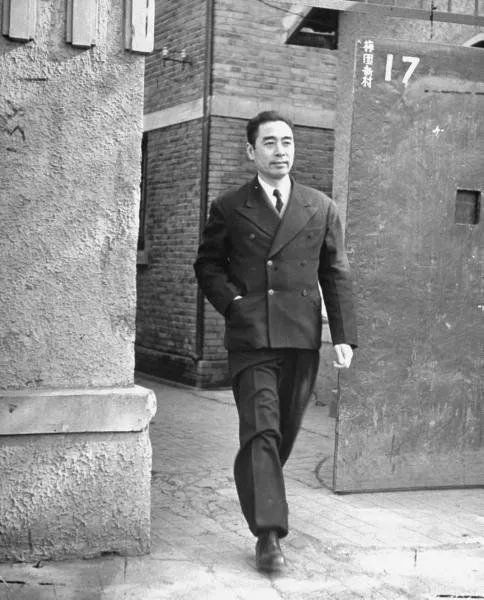
Photo: Leah von Essen, CC BY 4.0, via Wikimedia Commons
The prison library at Lorton Reformatory, just outside Washington, D.C., wasn't much to look at. A few shelves. Some donated volumes. Legal texts that were years out of date, their spines cracked and their margins filled with the notes of men who'd passed through before.
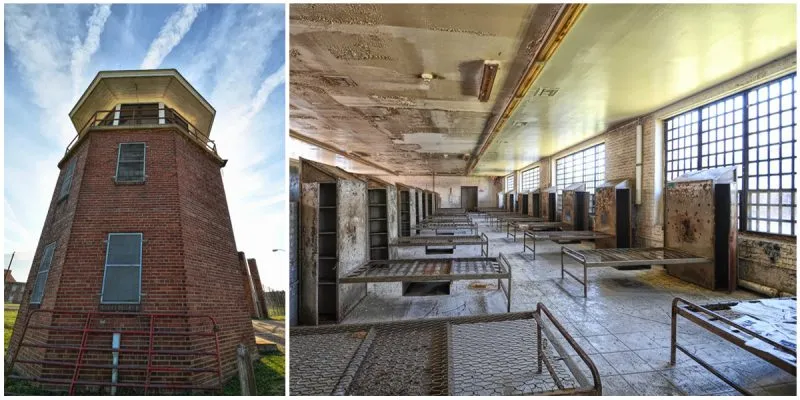 Photo: Lorton Reformatory, via www.thevintagenews.com
For most people, it was a place to pass time.
For Shon Hopwood, it was a way out.
 Photo: Shon Hopwood, via alchetron.com
A Kid From Nebraska Who Went Badly Wrong
Shon Hopwood grew up in a small town in Nebraska — the kind of place where everyone knows your name and expectations tend to run either very high or very low depending on which family you came from. He was athletic, bright, and by his own later admission, completely adrift.
In 1997 and 1998, at 22 years old, Hopwood and a group of friends robbed five banks. Not out of desperation or ideology — just bad decisions compounding into worse ones, the way they sometimes do when a young man has no clear sense of what he's supposed to be doing with his life.
He was caught, convicted, and sentenced to 12 years in federal prison.
There is nothing romantic about what followed. Prison is not a place that tends to produce clarity or growth — it is, by design, a place that grinds people down. What happened to Hopwood inside Lorton and later inside the Federal Correctional Institution in Pekin, Illinois, was not the result of a supportive system. It was the result of one man, alone with books, deciding that the only direction left was up.
The Moment the Books Took Hold
Hopwood didn't walk into the prison library with a plan. He walked in because he was bored, because the alternative was worse, and because another inmate — a man who'd been working through legal texts for years — handed him a petition and asked if he could help.
The petition was a request for certiorari: a formal appeal to the U.S. Supreme Court asking the justices to review a lower court's decision. The language was dense, the procedure arcane, the odds almost impossibly long. Hopwood had no legal training. He'd barely finished high school in any meaningful sense.
But something clicked.
He started reading. Not casually — obsessively. He worked through federal rules of procedure, studied Supreme Court opinions, read every certiorari petition he could find and compared the ones that succeeded against the ones that didn't. He wasn't studying law the way a law student studies it, with professors and outlines and Socratic method. He was studying it the way a mechanic learns an engine — by taking it apart and figuring out what makes it run.
The petition he helped write was granted. The Supreme Court agreed to hear the case.
The odds of that happening in any given year are around one percent.
Word Travels in Small Spaces
Inside federal prison, news moves fast. Hopwood had done something almost nobody does — gotten a case in front of the highest court in the country from behind bars, using library books and sheer stubbornness. Other inmates started bringing him their cases.
He kept working. He helped write petitions that were granted at a rate that defied every statistical expectation. He wasn't practicing law — he was legally prohibited from doing so — but he was doing something that looked, from the outside, remarkably like it.
A Georgetown law professor named Seth Waxman took notice. Waxman, a former U.S. Solicitor General, reached out to Hopwood while he was still incarcerated. What followed was a professional relationship built across prison visiting rooms — an Ivy League-trained legal heavyweight and a self-taught jailhouse lawyer, working together on real cases with real stakes.
Waxman later said that Hopwood's instincts for what the Supreme Court wanted to hear were as sharp as those of any clerk he'd ever worked with.
The Road Out and the Road Back In
Hopwood was released in 2009, having served a decade of his sentence. He came out with no money, a felony record, and an informal legal education that no institution had recognized or certified.
What he did next was not simple. Reentry after a long federal sentence is brutal — the stigma, the practical barriers, the constant reminder that the system you're trying to re-enter is also the one that defined you as someone who didn't belong.
But Hopwood had something most people don't: he knew the law. Not just its surface, but its texture and its logic. He enrolled at Georgetown University Law Center, earned his law degree, passed the bar, and was eventually granted a pardon by the governor of Nebraska — clearing the path for him to actually practice.
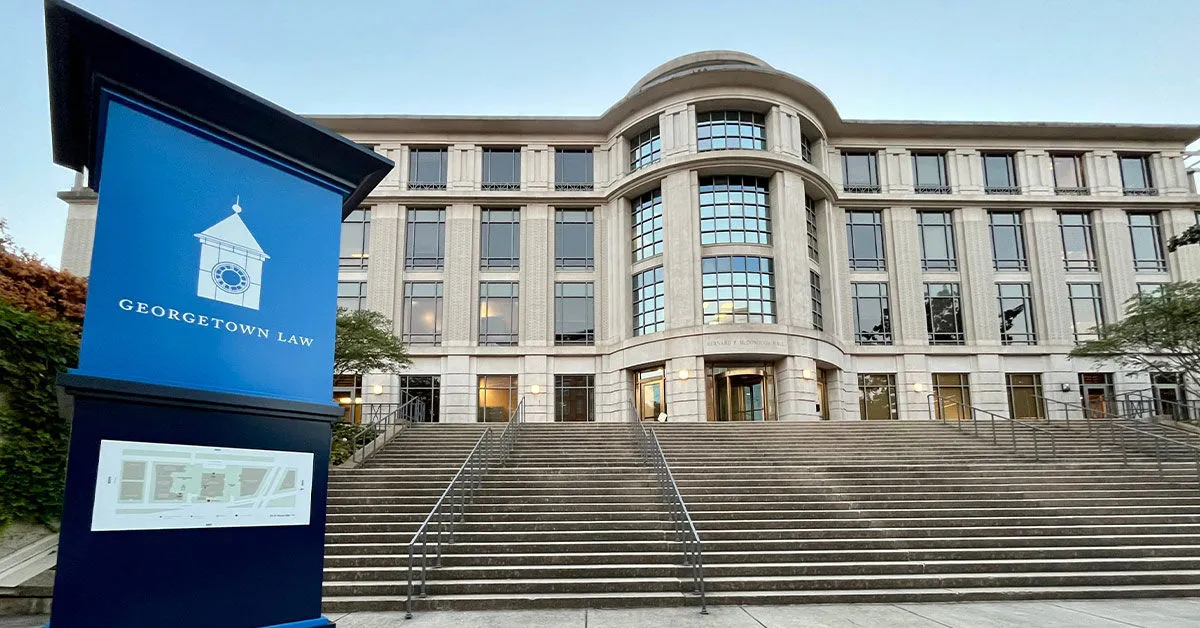 Photo: Georgetown University Law Center, via ik.imagekit.io
He went back to Georgetown. As a professor.
He now teaches criminal law and federal courts, specializing in criminal justice reform and the rights of incarcerated people. The man who learned to read legal briefs by lamplight in a federal cell is now training the next generation of lawyers.
What the Library Actually Gave Him
It would be easy to frame Hopwood's story as a triumph of the system — proof that the machinery works, that if you're smart enough and determined enough, the right doors will open.
Hopwood himself would push back on that framing.
What the prison library gave him wasn't a path the system designed. It was a crack in the wall — barely wide enough to squeeze through — that he found through sheer force of will and an almost irrational commitment to understanding something that was never meant for him to understand.
Most people in his position don't have that crack. The library books are out of date. The access is limited. The time and mental space required to absorb complex legal doctrine is constantly eroded by the noise and violence and despair that define incarceration.
Hopwood got out. And then he spent his career arguing that the system needs to change so that getting out doesn't require a miracle.
The Lesson Nobody Assigned
There's a version of this story that treats the prison library as a quirky backdrop — the unlikely setting for an unlikely success. But the library wasn't incidental. It was everything.
In the absence of every other resource — money, connections, credentials, freedom — books remained. And in those books was the language of a system that had processed Hopwood like a number and expected nothing further from him.
He learned that language. He used it. And eventually, he turned it against the assumptions that built the walls around him.
That's not a story about the system working. That's a story about one person deciding that the system's verdict on him was not the final word.
And then proving it, one page at a time.