Broke, Desperate, and Brilliant: The Rock-Bottom Origins of America's Most Beloved Board Games
The Best Ideas Come From the Worst Situations
There's a version of American creativity that gets told constantly — the garage startup, the lone genius, the eureka moment in a well-funded lab. It's a clean story, and it's almost never the real one.
The real story, more often than not, involves someone who has run out of options. Someone who has lost the job, blown the savings, been turned down by everyone who was supposed to matter. Someone who builds something not because they had the luxury of inspiration but because they had absolutely nothing left to lose.
America's most beloved board games were built by exactly those people. The games that have logged more hours on more kitchen tables than almost any other object in the country — Monopoly, Scrabble, Clue, The Game of Life — were invented by people in financial freefall, dismissed by experts, or operating on sheer stubbornness in the absence of any reasonable hope.
Here's what their stories actually look like.
Monopoly: The Game That Was Never Supposed to Be a Game
Charles Darrow gets the credit on the box. But the real origin of Monopoly starts with a woman named Elizabeth Magie, a progressive activist and game designer who, in 1903, invented something she called The Landlord's Game — a deliberate illustration of how landlords extract wealth from renters, designed to teach players about the injustice of land monopolies.
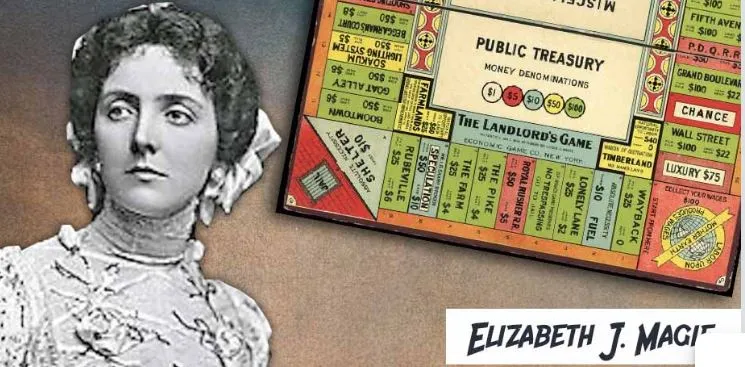 Photo: Elizabeth Magie, via blogger.googleusercontent.com
Magie was not trying to entertain. She was trying to make a political argument in a form people might actually engage with. She was, in the most literal sense, using a game to say something nobody in power wanted to hear.
By the time Darrow encountered a version of Magie's game in the 1930s — during the Great Depression, when he was an unemployed heating engineer with a family to feed — it had traveled through living rooms and community halls for three decades. Darrow adapted it, added the Atlantic City street names, and sold it to Parker Brothers in 1935. He made millions. Magie received a one-time payment of $500 and no royalties.
The game that teaches players about the ruthlessness of capitalism was itself born from an act of economic ruthlessness. You cannot make this up.
What matters for our purposes: the game that has sold over 275 million copies worldwide began as a desperate act of political communication from someone who had no other platform. Constraint didn't limit the idea. It created it.
Scrabble: Rejected by Everyone, Beloved by Millions
Alfred Mosher Butts was an architect who lost his job during the Great Depression. With time on his hands and bills mounting, he did what unemployed people with analytical minds sometimes do: he studied what was missing from the world and tried to build it.
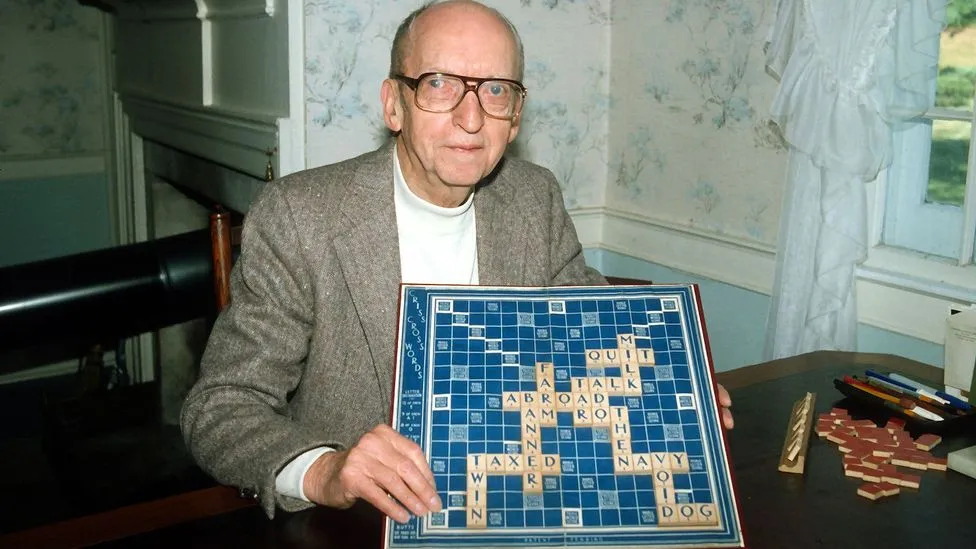 Photo: Alfred Mosher Butts, via ychef.files.bbci.co.uk
Butts spent years analyzing newspaper letter frequencies, calculating probabilities, and designing a word game that balanced luck with skill. He called it Criss-Crosswords. He tried to sell it. Every major game manufacturer in America turned him down.
For over a decade, Butts and his wife produced the game by hand, selling modest quantities to friends and acquaintances. The rejection didn't stop. The manufacturing didn't stop either.
In 1948, a man named James Brunot acquired the rights and renamed it Scrabble. A few years later, the president of Macy's discovered it on vacation, loved it, and ordered it for his stores. Within a year, demand had completely outstripped supply.
Butts had been right about the game for fifteen years before anyone with money agreed with him. The decade of rejection hadn't proven him wrong. It had just been a long, expensive waiting room.
Clue: A Game Born in the London Blackout
Anthony Pratt was a musician and aspiring inventor living in England during World War II. The German bombing of British cities had turned ordinary social life into a logistical impossibility — people were sheltering in place, gatherings were dangerous, and entertainment that could be played indoors with a small group became suddenly precious.
Pratt invented Cluedo (sold in America as Clue) during the wartime blackouts. The game's setting — a mansion, a murder, a finite set of suspects — was a direct product of a world where movement was restricted and imagination had to substitute for freedom.
Parker Brothers brought it to the American market in 1949. It has never gone out of print.
The game about being trapped in a house with a killer was literally invented by someone trapped in a house by a war. Sometimes the metaphor and the reality are exactly the same thing.
The Game of Life: A Bankrupt Man's Guide to Living
The original version of The Game of Life was created by Milton Bradley in 1860, just before the Civil War. Bradley was a young lithographer whose business had collapsed after a single bad decision: he'd printed thousands of portrait cards featuring Abraham Lincoln — clean-shaven Lincoln — just before Lincoln grew the beard that would define his image. The cards were unsellable overnight.
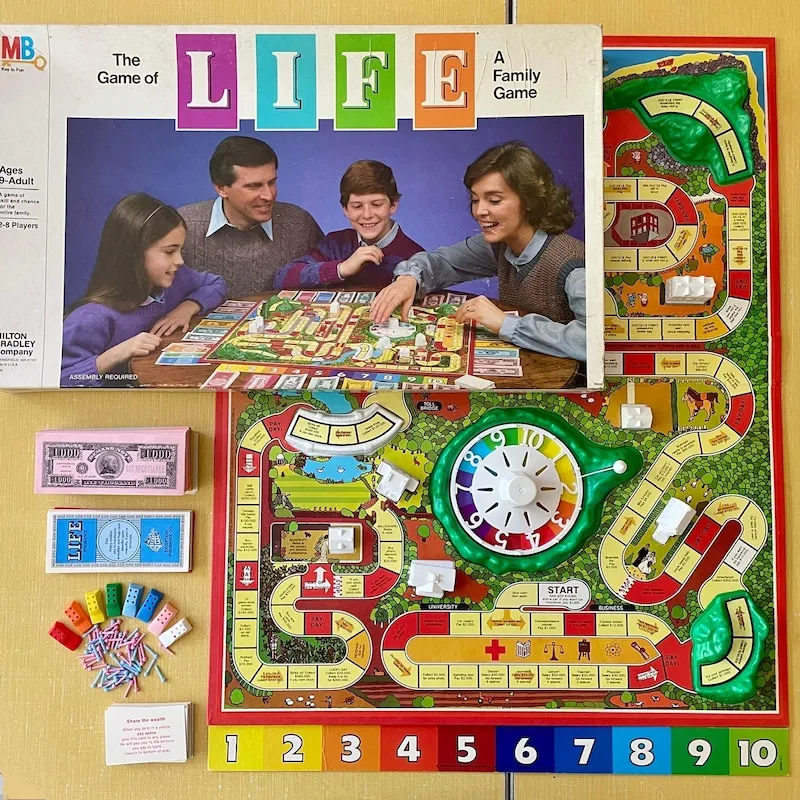 Photo: Milton Bradley, via i.etsystatic.com
Bankrupt and humiliated, Bradley pivoted. He designed a game called The Checkered Game of Life — a board game that simulated the moral and financial ups and downs of a human existence. It sold 45,000 copies in its first year.
Out of a failed business and a spectacular miscalculation, Bradley built what would eventually become one of the most successful toy companies in American history. The game that simulates the randomness of a life was invented by someone who had just experienced exactly that randomness firsthand.
What These Stories Are Really About
The easy lesson here is that constraints breed creativity. That's true, but it's not quite the whole story.
What these inventors share is something more specific: they were operating outside the system of approval that normally governs what gets made and what doesn't. Elizabeth Magie had no publisher. Alfred Butts had no manufacturer. Anthony Pratt had no peacetime. Milton Bradley had no business left.
Without the infrastructure of conventional success, they were forced to build something from scratch — to make it work on its own terms, not on the terms of whoever held the checkbook.
That's the part that gets edited out of most success stories. The freedom that comes from having nothing left to protect. The clarity that arrives when you stop trying to impress the people who've already said no.
America's most beloved games were made by people in exactly that position. Not despite it. Because of it.
The next time someone tells you the circumstances are all wrong, remember: the circumstances were always wrong. They built the game anyway.