The Mailman Who Mapped America: How a Rural Letter Carrier Became the Country's Most Unlikely Cartographer
The Route That Nobody Wanted
In 1907, the Postal Service assigned Oscar Berninghaus the worst mail route in Montana Territory — 200 miles of unmarked trails connecting homesteads scattered across the Judith Basin like seeds thrown by a careless hand. Other carriers had quit within months, complaining that half the addresses didn't exist and the other half couldn't be found.
 Photo: Oscar Berninghaus, via static.zerochan.net
Berninghaus saw something different. Where others saw chaos, he saw a puzzle waiting to be solved.
The 23-year-old son of German immigrants had grown up reading his father's surveying manuals for entertainment. While his siblings played with toys, Oscar traced property boundaries and calculated elevations. His mother worried he'd never find practical work for such an odd obsession.
She needn't have worried.
Drawing the Invisible Country
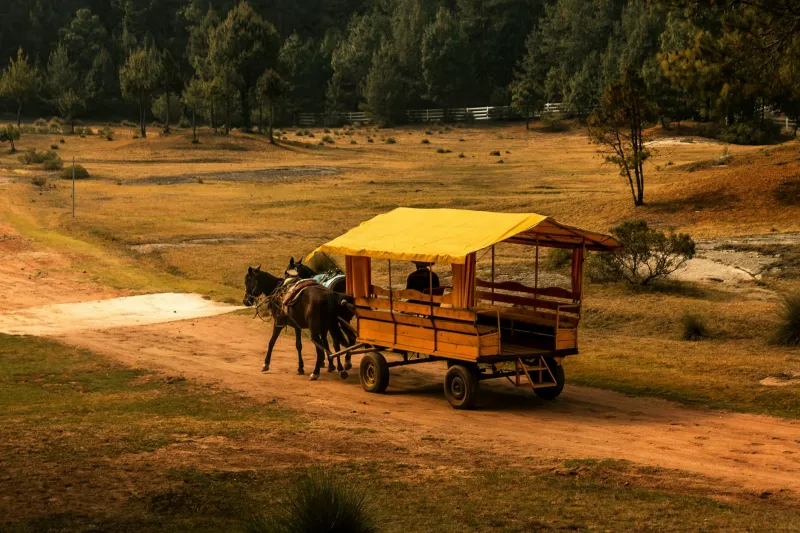
Every morning for the next three decades, Berninghaus loaded his wagon with mail and something else: a leather portfolio filled with blank paper, pencils, and a compass his father had given him. As he delivered letters to ranchers and miners, he began sketching.
At first, it was simple self-preservation. The official postal maps were so inaccurate they were worse than useless — they showed roads that didn't exist and missed the ones that did. Berninghaus started drawing his own corrections, noting when Willow Creek actually ran two miles south of where the government said it should.
But what began as practical necessity evolved into something approaching artistic obsession. Berninghaus didn't just mark where things were; he documented everything. The seasonal creek that only flowed during spring snowmelt. The abandoned homestead where the Kowalski family had tried to farm before the drought of 1910. The shortcut through Eagle Canyon that could save a day's travel if you knew where to find it.
His wife, Martha, grew accustomed to finding him at their kitchen table long after midnight, hunched over his maps by lamplight, adding details from that day's route. "Oscar sees the country different than other people," she would tell neighbors. "Like it's a book he's trying to read."
The Government Takes Notice
By 1925, Berninghaus had filled seventeen volumes with hand-drawn maps covering over 10,000 square miles of Montana, Wyoming, and North Dakota. His reputation among fellow postal workers had grown legendary — if you needed to find any address in the northern Rockies, you asked Oscar.
That reputation eventually reached Washington.
Dr. William Morris, chief cartographer for the U.S. Geological Survey, was touring Western field offices when he heard about the mailman who supposedly knew every creek and cabin between Billings and the Canadian border. Morris was skeptical until he saw Berninghaus's work.
 Photo: U.S. Geological Survey, via vleva.eu
"These aren't just maps," Morris wrote in his field report. "They're archaeological documents of settlement patterns. This man has recorded the American frontier as it actually developed, not as we imagined it should."
The USGS commissioned Berninghaus to survey regions that had never been officially mapped. For the first time in his career, the mailman was paid to do what he'd been doing for free.
More Than Lines on Paper
What made Berninghaus extraordinary wasn't just his technical skill — though his measurements proved accurate to within feet when checked against modern GPS. It was his understanding that maps tell human stories.
His charts included details no government survey would ever record: which ranches had reliable water during drought years, where immigrant families had built their first shelters, how Native American hunting trails had evolved into postal routes. He mapped America as people actually lived in it, not as bureaucrats in Washington thought they should.
When the Great Depression hit Montana in 1929, Berninghaus's maps became invaluable for federal relief efforts. Government agents could locate isolated families who needed assistance, thanks to a postal worker's three decades of paying attention to details everyone else had ignored.
The Quiet Revolution
Berninghaus never sought fame for his work. He continued delivering mail until his retirement in 1937, turning down offers to join the USGS full-time because, as he told his supervisor, "The mail still needs delivering, and I know where everyone lives."
But his influence on American cartography was profound. The mapping techniques he developed — combining official surveys with local knowledge and ground-truth verification — became standard practice for the USGS. His emphasis on documenting human settlement patterns influenced how the federal government approached regional planning for decades.
More than 400 geographic features across the northern Rockies still bear names that Berninghaus first recorded: Widow's Creek (named for Mrs. Kowalski), Mailman's Pass (his own shortcut through the Crazies), and dozens of others that exist on modern maps because a postal worker took the time to ask locals what they called the places where they lived.
The Lesson in the Route Book
Oscar Berninghaus died in 1943, still living in the same small house where he'd drawn his first maps. His personal collection of charts and route books was donated to the Montana Historical Society, where researchers continue to discover insights about Western settlement patterns.
His story reminds us that expertise often develops in unexpected places. While university-trained cartographers were drawing maps from distant offices, a mailman was creating more accurate charts from the seat of his wagon. He succeeded because he understood something his formally educated colleagues had missed: the difference between knowing where things are supposed to be and knowing where they actually are.
The American West that Berninghaus mapped no longer exists — the homesteads have been abandoned, the seasonal creeks have dried up, the shortcuts have been replaced by highways. But his work preserved a moment when the country was still figuring out what it wanted to become, one delivery route at a time.
Sometimes the most important work happens when nobody's watching, by people nobody expects to change anything. Oscar Berninghaus spent thirty years just trying to deliver the mail on time. Along the way, he accidentally mapped America.