Lost in the Curriculum: Five Scientists Who Wandered Into the Wrong Field — and Changed the Right One Forever

There's a version of the success story we all know by heart. The prodigy who knew from age six. The student who never wavered. The researcher who followed the straight line from classroom to breakthrough without a single wrong turn.
That story is mostly fiction.
The real version — the one that actually shows up in the footnotes of scientific history — looks a lot messier. It looks like a chemistry major who couldn't pass organic chemistry. A pre-med student who wandered into a geology elective and never left. A dropout who picked up a library book on a whim and accidentally rewired a field nobody expected him to touch.
Here are five Americans who got lost in the curriculum — and found something extraordinary on the other side.
1. Charles Richter — The Physicist Who Accidentally Measured the Earth
Charles Richter didn't set out to become the man whose name is permanently attached to earthquakes. He enrolled at Stanford as a physics student with his sights fixed on theoretical work — the kind of elegant, abstract science that happens entirely on paper. Seismology wasn't even on his radar.
But in the late 1920s, a job offer landed him at the California Institute of Technology, working under seismologist Harry Wood. It was meant to be temporary. A paycheck while he figured out his next move.
What happened instead was that Richter got obsessed. The data was messy, the measurements were inconsistent, and nobody had a reliable way to compare earthquakes across different locations. That problem gnawed at him. By 1935, he had developed what he called a magnitude scale — a logarithmic system for measuring seismic energy that could finally make sense of the chaos.
The Richter Scale. You've heard of it.
He never meant to stay in seismology. He just couldn't leave a problem unsolved.
2. Barbara McClintock — The Botanist Who Wasn't Supposed to Be There
Barbara McClintock's mother actively tried to talk her out of college. Higher education, in her mother's view, would make her unmarriageable. McClintock enrolled at Cornell anyway — in agriculture, partly because it was one of the few departments that would accept women with any seriousness.
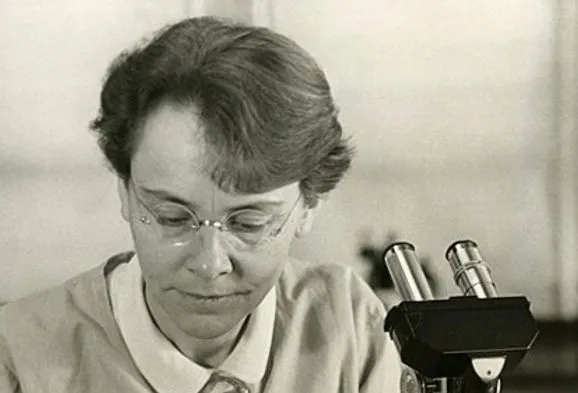 Photo: Barbara McClintock, via static.wixstatic.com
She intended to study plant breeding in the most straightforward sense. Instead, she fell into cytology — the study of cells — almost by accident, after a genetics course lit something up in her that she hadn't expected.
For decades, her work on maize chromosomes was either ignored or actively dismissed. She was describing something called "transposable elements" — genes that could move around within a genome — and the scientific establishment essentially told her she was wrong. She kept working anyway, in relative isolation, at Cold Spring Harbor Laboratory in New York.
In 1983, she won the Nobel Prize in Physiology or Medicine. She was 81 years old. The field she'd stumbled into because women had limited options had, it turned out, been waiting for exactly her.
3. Wilson Greatbatch — The Engineer Who Built the Wrong Circuit
Wilson Greatbatch was an electrical engineering graduate student at Cornell in the 1950s when he made what should have been a minor, embarrassing mistake. He was building a circuit to record heart sounds — a fairly routine project — and accidentally installed a resistor with the wrong value.
The circuit didn't record anything. Instead, it pulsed. Rhythmically. Steadily.
Greatest accident in medical history.
Greasbatch recognized immediately what he was looking at: an electrical pulse that mimicked the human heartbeat. He spent the next two years miniaturizing the device, eventually implanting the first successful pacemaker in a human patient in 1960. Before his invention, people with heart block — a condition that disrupts the electrical signals controlling the heartbeat — had almost no options.
After it, they had decades.
Greasbatch had been studying engineering, not medicine. He'd made a wiring error, not a plan. The wrong resistor saved millions of lives.
4. Lynn Margulis — The Dropout Who Rewrote the Origin of Complex Life
Lynn Margulis was a teenager when she enrolled at the University of Chicago through an early-entrance program, and by her own account, she was more interested in ideas than in following any particular academic path. She moved through disciplines with restless curiosity — biology, genetics, philosophy — collecting frameworks rather than credentials.
Her central theory, developed in the 1960s, was that complex cells evolved through a process called endosymbiosis — essentially, that the organelles inside our cells (like mitochondria) were once free-living bacteria that got absorbed and never left. It was a radical idea. The journal Science rejected her paper fifteen times.
She published it anyway. And she turned out to be right.
Endosymbiosis is now foundational biology. Every textbook in every high school in America contains her idea. But it came from someone who never quite fit inside any single discipline — someone who was, by temperament and by habit, always looking sideways at the question everyone else was looking at straight on.
5. Percy Julian — The Chemistry Student Who Had to Teach Himself Twice
Percy Julian graduated valedictorian of his class at DePauw University in 1920 — and then watched as graduate schools refused to admit him because he was Black. He found work as a chemistry teacher, but the research opportunities available to him were almost nonexistent.
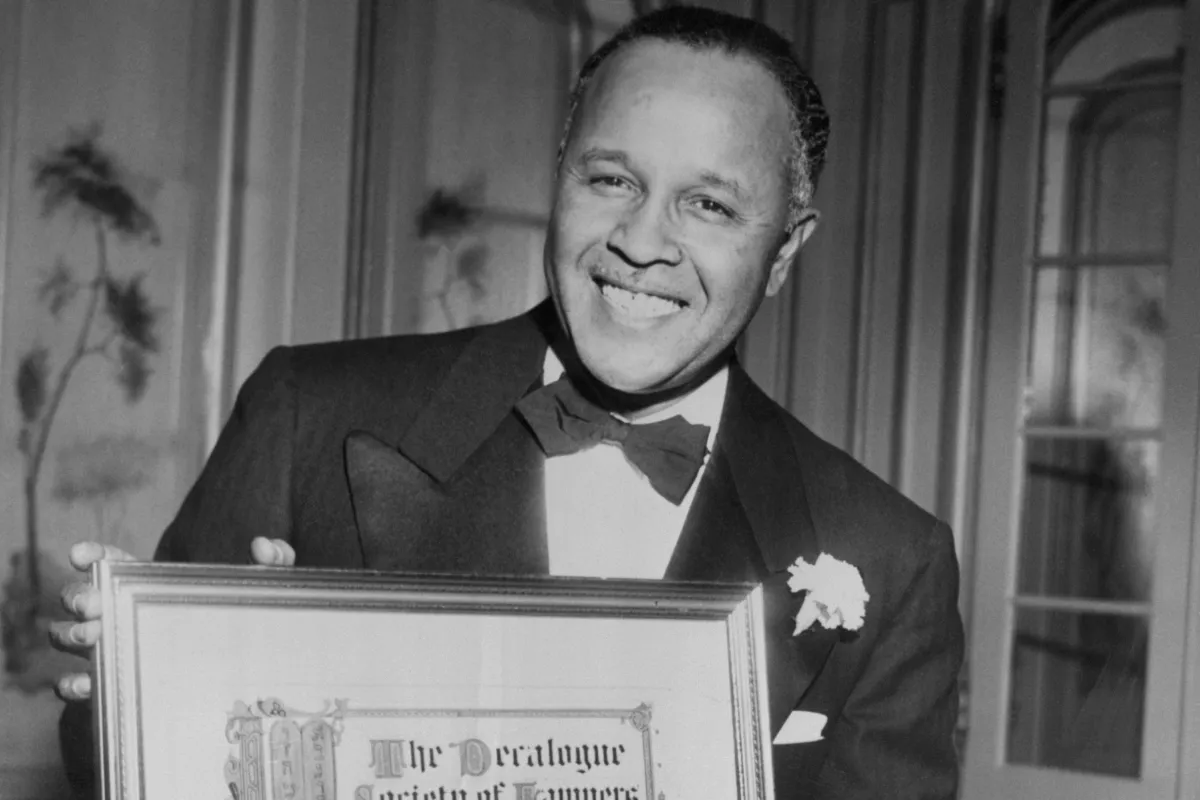 Photo: Percy Julian, via www.thoughtco.com
He eventually earned his doctorate in Vienna, returned to the United States, and got a research position at the Glidden Company — a paint manufacturer — which was not exactly where a groundbreaking chemist expected to make history.
But Julian used soybean chemistry to synthesize progesterone and testosterone at scale, making hormones affordable for the first time. He later synthesized cortisone, transforming the treatment of rheumatoid arthritis. He held more than 130 patents.
He had been forced out of every conventional path. Every institution that should have welcomed him had turned him away. So he built his breakthroughs from the margins, in a paint company lab, in a country that kept telling him he didn't belong.
He belonged to history instead.
The Pattern Nobody Teaches
What connects these five people isn't genius alone — though they had that. It's that each of them, at some critical moment, ended up somewhere they hadn't planned to be. And instead of treating that as failure, they treated it as information.
The wrong resistor. The unwanted job. The rejected paper. The door that wouldn't open.
Science's official story tends to smooth those moments out. It makes discovery look inevitable — like the right person was always going to end up in the right place. But the actual history is full of accidents, detours, and near-misses that turned out to matter more than any straight line ever could.
You don't always find the breakthrough. Sometimes the breakthrough finds you — usually when you're lost.