The Farm Kid Who Filed the World: How One Upstate New York Boy's Obsession With Order Quietly Built the Invisible Architecture of the Internet
The Farm Kid Who Filed the World: How One Upstate New York Boy's Obsession With Order Quietly Built the Invisible Architecture of the Internet
There is a system underneath everything you search for online. A logic, invisible and ancient, that tells a machine — or a librarian, or a database — where something belongs and how to find it again. Most people never think about it. Melvil Dewey couldn't stop thinking about it. He thought about it as a child in Adams Center, New York, a town so small it barely registered on regional maps. He thought about it while doing farm chores, while sitting in a one-room schoolhouse, while watching his family struggle to make ends meet in the years after the Civil War. Order, to young Melvil, wasn't just a preference. It was a calling.
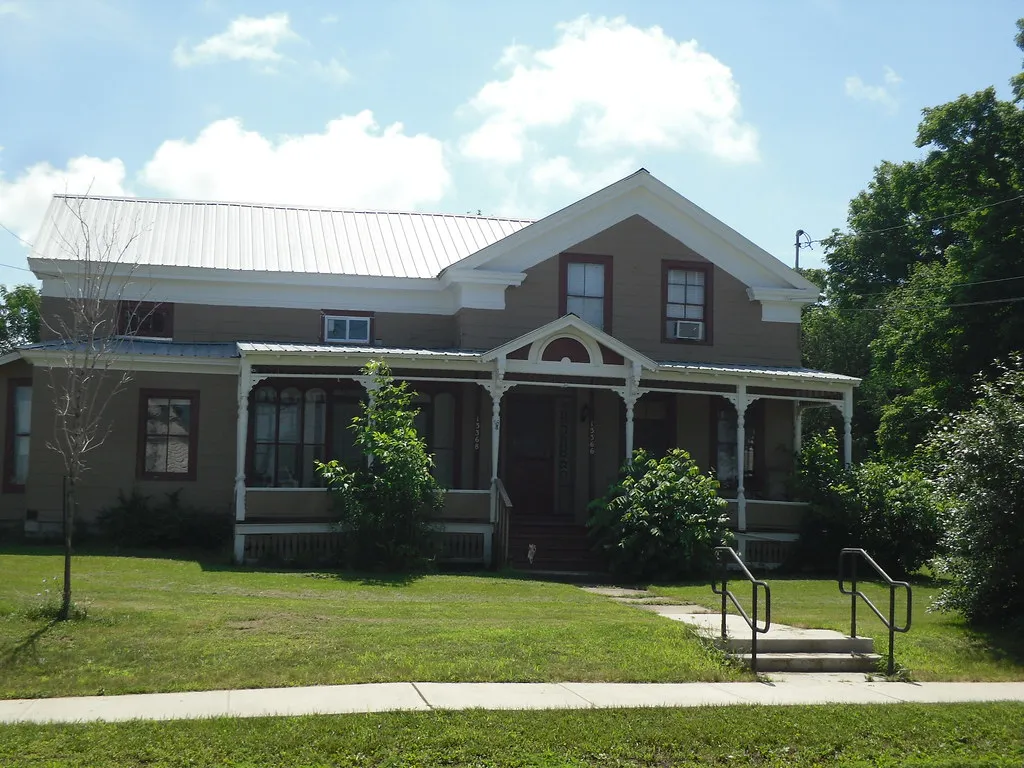 Photo: Adams Center, New York, via live.staticflickr.com
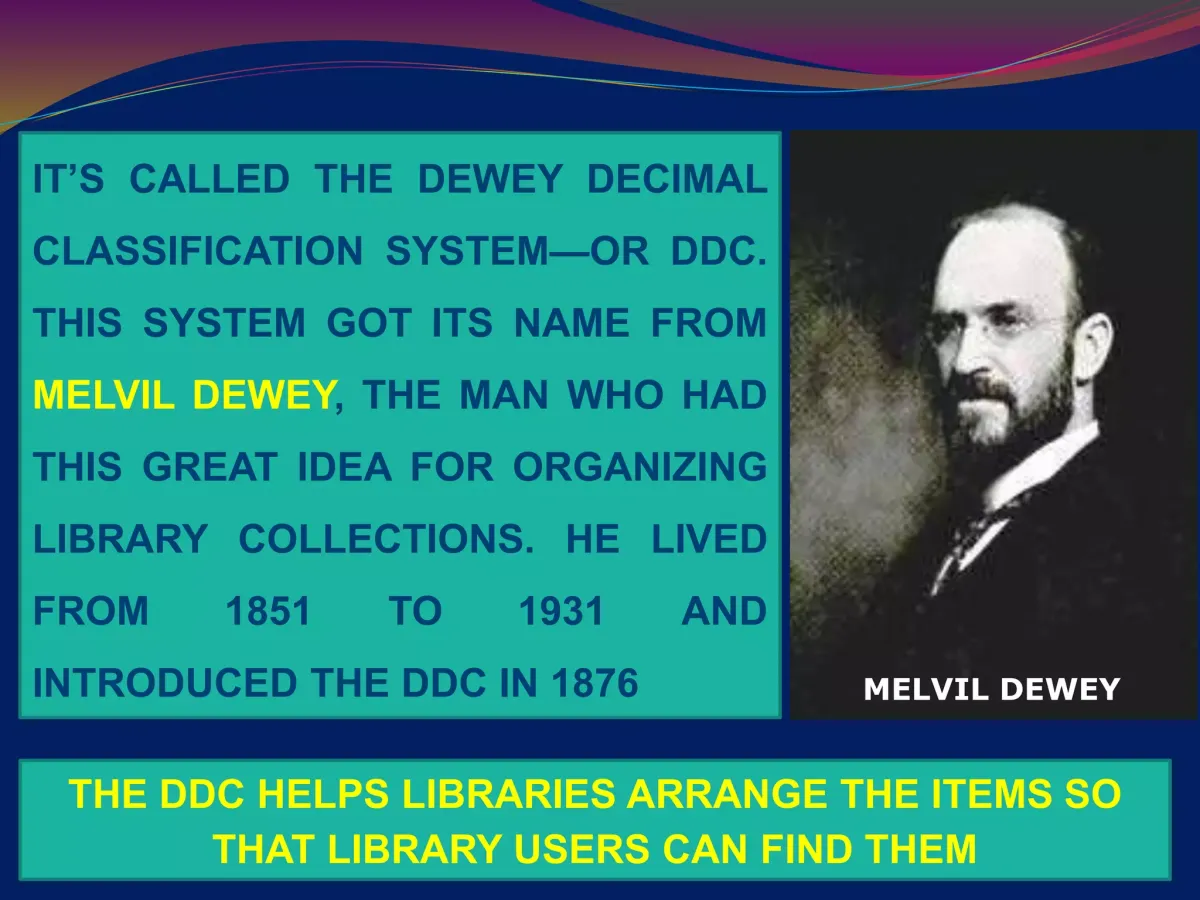 Photo: Melvil Dewey, via image.slidesharecdn.com
He was born in 1851, the youngest of five children, in a household where chaos was the default setting. His father ran a general store that doubled as a kind of community dumping ground — goods stacked without logic, accounts kept inconsistently, time wasted every single day searching for things that should have been easy to find. Dewey watched all of this with something close to physical discomfort. As a teenager, he reportedly reorganized the store's inventory without being asked, then moved on to the family's bookshelves, then to the church lending library nearby. He wasn't showing off. He genuinely couldn't help it.
A Mind Built for Problems Nobody Had Named Yet
When Dewey enrolled at Amherst College in Massachusetts in the early 1870s, he arrived not as a wealthy student with connections but as a scholarship kid from the rural edge of nowhere, working his way through school in the college library. That job — which most students would have considered a minor inconvenience — turned out to be the entire point of his education.
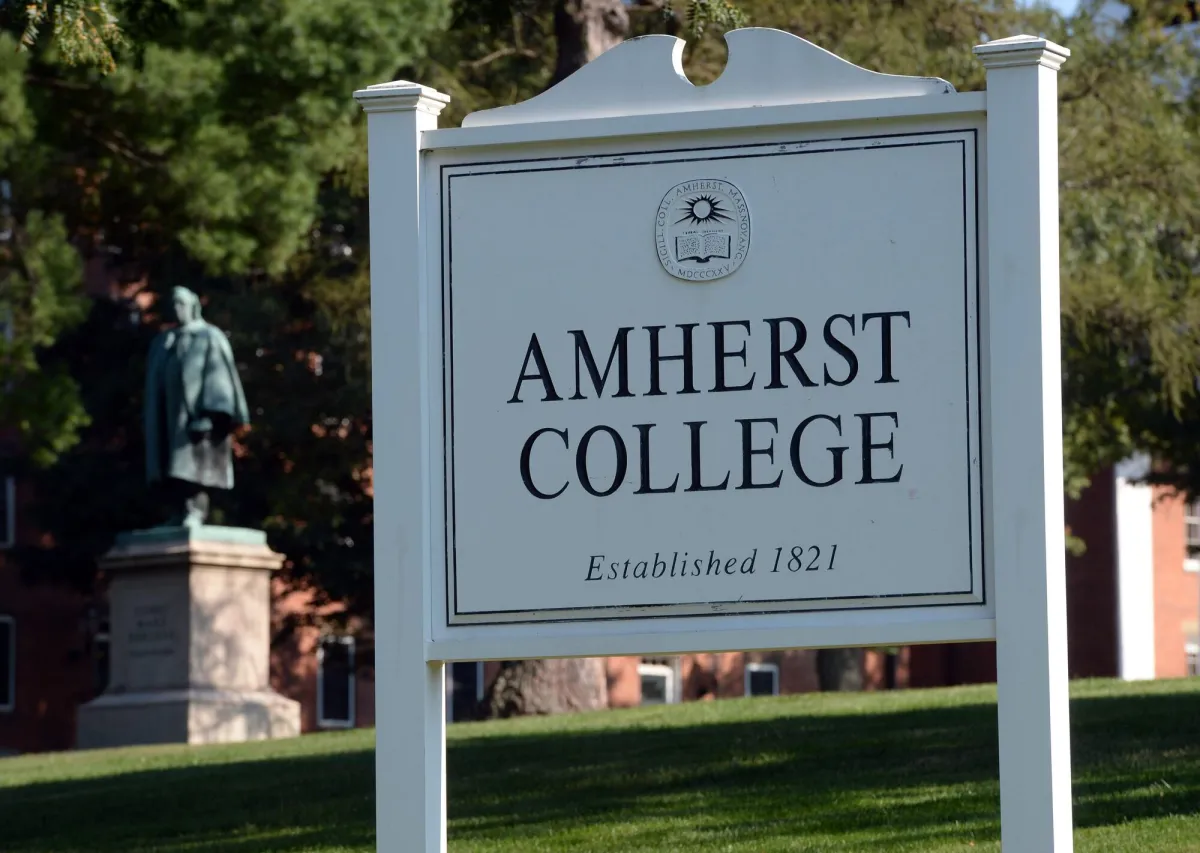 Photo: Amherst College, via www.masslive.com
The Amherst library in those years was, like most American libraries of the era, a beautiful disaster. Books were shelved by size, or by the order in which they'd been donated, or by some long-forgotten logic that died with whoever invented it. Finding a specific volume required either a personal guide or tremendous luck. Dewey found this intolerable. He spent months — reportedly skipping meals, staying late, filling notebooks — developing a system that would allow any book on any subject to be assigned a numerical address. A place it would always live. A number that would mean the same thing in Amherst as it did in Chicago or San Francisco.
He called it the Dewey Decimal Classification. He was twenty-one years old.
The idea was deceptively simple: divide all human knowledge into ten broad categories, then divide each of those into ten subcategories, then again, and again, building a branching numerical tree that could theoretically hold every book ever written and every book that hadn't been written yet. It was, in the language of a much later century, a taxonomy — a structured framework for organizing information in a way that made retrieval fast, consistent, and scalable.
The Thing He Built That Outlived Every Argument About Him
Dewey published his system in 1876, the same year he helped found the American Library Association. He was not yet twenty-five. The library world, cautious and tradition-bound, adopted his classification slowly at first, then rapidly, then universally. By the turn of the century, the Dewey Decimal System was in use across thousands of American public libraries. By the mid-twentieth century, it had spread to libraries in more than a hundred countries.
He went on to found the first professional library school in the United States, at Columbia University, where he controversially admitted women as students when Columbia itself would not — a decision that was both radical and pragmatic, since women made up the majority of working librarians. He pushed for simplified spelling in the English language (he legally shortened his own first name from Melville and signed his last name as "Dui" for a period). He had grand, sometimes exhausting opinions about almost everything.
He was also, by many accounts, a deeply flawed man. He was accused of anti-Semitism in his professional associations, and multiple women came forward with accounts of harassment. History has had to hold both things at once: the genuine revolutionary and the genuinely troubling human being.
But the system survived him, and it survived his contradictions.
What a Decimal Point Actually Means
Here's what's easy to miss about what Dewey did: he didn't just organize books. He proposed that human knowledge itself had a shape — that it could be mapped, that every idea had a neighborhood where it belonged, and that the map could be updated as new knowledge arrived without the whole structure collapsing.
That idea is not historically minor. It is the direct ancestor of the folder structure on your computer, the metadata tags on every digital photograph you've ever taken, the hierarchical categories on every e-commerce site, and — most significantly — the indexing logic that made search engines possible. When Larry Page and Sergey Brin were building Google in a Stanford dorm room in the late 1990s, they were solving a problem Dewey had first articulated in 1876: how do you find the thing you're looking for inside an enormous, constantly growing collection of human-created information?
Dewey's answer was a number. Google's answer was an algorithm. But both begin from the same premise — that information without organization is just noise, and that the act of classification is itself a form of power.
From a Pantry in Adams Center to the Invisible Architecture of Everything
There is something almost poetic about the fact that the man who built the framework for modern information retrieval grew up in a place where information barely moved at all. Adams Center, New York in the 1850s was a world of limited horizons — a farming community where most people were born, worked, and died within a few miles of each other. News traveled slowly. Books were scarce. The idea that all human knowledge could be organized into a single coherent system would have sounded, to most of Dewey's neighbors, like the fantasy of a very strange child.
It was. And that's exactly what made it possible.
Dewey didn't have the luxury of assuming the world was already well-organized. He grew up watching disorder and inefficiency up close, every day, and he never stopped believing that someone ought to fix it. That belief — stubborn, provincial, slightly obsessive — turned out to be one of the most consequential ideas in the history of how human beings manage what they know.
The next time you type a question into a search bar and get an answer back in half a second, you are, in some small but real way, using something that started in a cluttered general store in upstate New York, in the restless mind of a kid from nowhere who couldn't stop filing things away.