The Woman Who Built Schools With Empty Hands: Mary McLeod Bethune and the Education She Refused to Be Denied
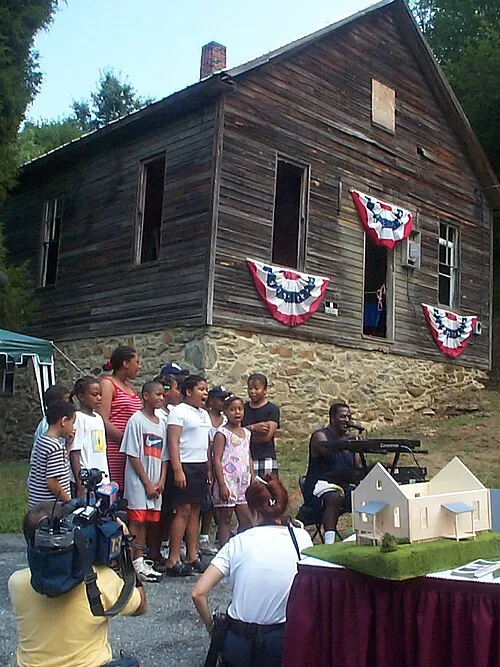
Photo: Preservation Maryland, CC BY-SA 2.0, via Wikimedia Commons
She was fifteen years old the first time she understood exactly how the system had been designed.
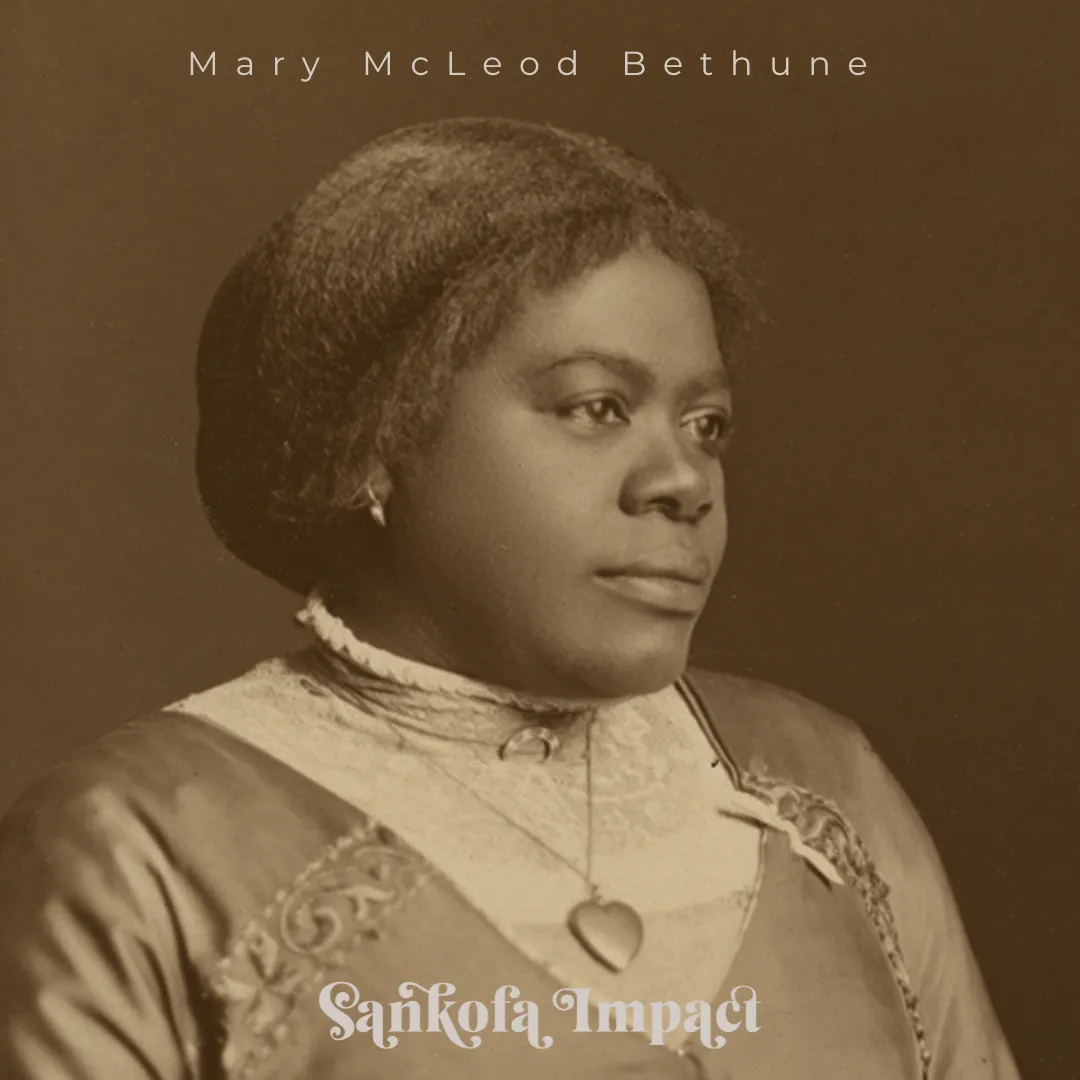 Photo: Mary McLeod Bethune, via sankofaimpact.org
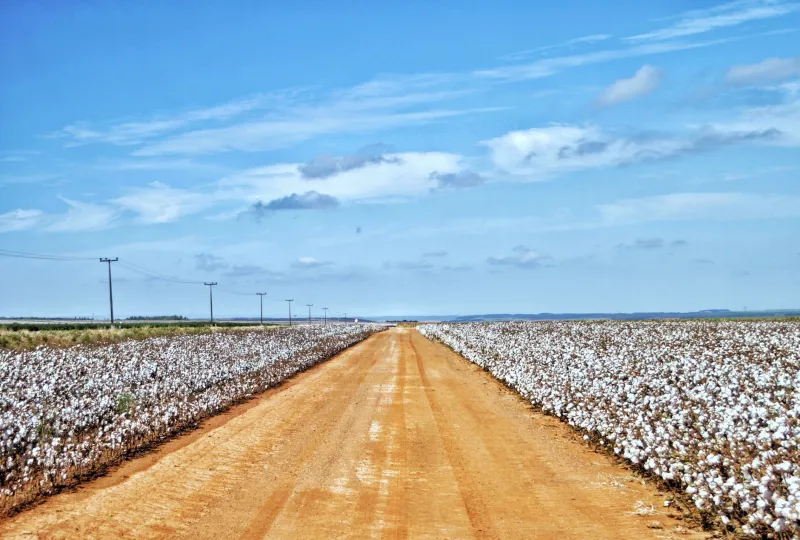
Mary McLeod was picking cotton on her family's farm in Mayesville, South Carolina, when she visited a neighboring plantation with her mother. A white child picked up a book. When Mary reached for it, the girl pulled it away. You can't read, the child said. It wasn't a taunt. It was just a fact — the kind of fact that an entire social order had worked very hard to make permanent.
Mary McLeod went home and decided that fact was wrong.
The Fifteenth Child of Former Slaves
Mary Jane McLeod was born in 1875 in Mayesville, South Carolina — the fifteenth of seventeen children born to Sam and Patsy McLeod, who had both been enslaved before emancipation. The family farmed five acres of land they had managed to buy after freedom came. It was not much, but it was theirs.
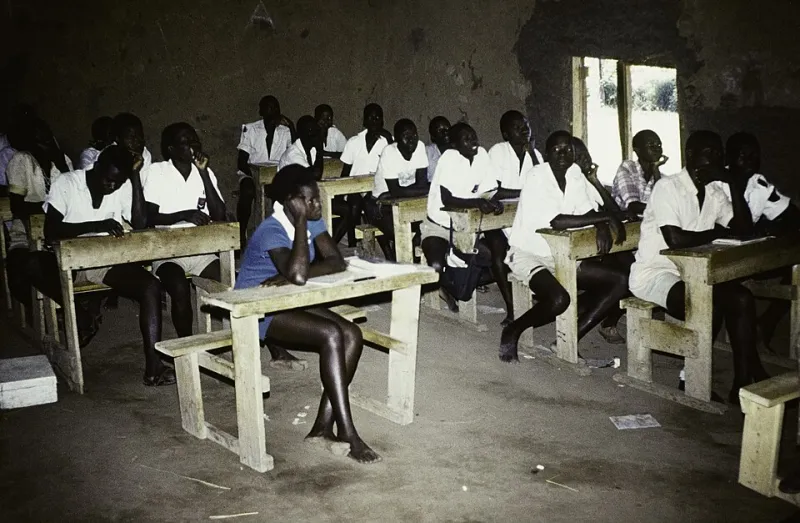
Education, in the rural South of the 1870s and 1880s, was not a given for Black children. It was barely available. A missionary school called the Trinity Presbyterian Mission School opened near Mayesville when Mary was around ten years old, and she walked five miles each way to attend it — the only child from her family who went, because someone had to keep working the fields.
She was a gifted student. Her teacher, Emma Jane Wilson, recognized it immediately and helped secure a scholarship for her to attend Scotia Seminary in Concord, North Carolina. From there, she went to the Moody Bible Institute in Chicago — one of the only Black students in the program.
She wanted to become a missionary in Africa. The Presbyterian Mission Board told her there were no openings for Black missionaries.
So she pivoted. If the door abroad was closed, she would build something at home.
Five Dollars and a Dream That Refused to Be Practical
In 1904, Mary McLeod Bethune — she had married Albertus Bethune in 1898 — arrived in Daytona Beach, Florida, with $1.50 in her pocket, her young son, and a specific intention: to open a school for Black girls.
 Photo: Daytona Beach, via www.traveloffpath.com
Daytona Beach at that time was a boom town, fed largely by the labor of Black workers who built the railroads and hotels that made the place run. Those workers had children. Those children had almost nowhere to go to school.
Bethune rented a small house near the city dump — the only property available to her — and opened the Daytona Literary and Industrial Training School for Negro Girls on October 3, 1904. She had five students. She made her own ink from elderberries. She used charcoal for pencils. She burned logs for heat and sold sweet potato pies to railroad workers to raise money for supplies.
She did not wait for permission. She did not wait for funding. She did not wait for the system that had excluded her to suddenly decide to include her.
She built.
The Art of Persuading the Unconvinced
Bethune understood something that many idealists miss: conviction alone doesn't build institutions. Money does. And money, in early 20th-century Florida, lived mostly with white businessmen who had no particular reason to care about a school for Black girls.
She went to them anyway.
She took her students to perform for donors. She invited skeptics to see the school for themselves. She was charming, persistent, and completely strategic — not because she was willing to compromise her mission, but because she knew that the mission required resources she didn't have and couldn't conjure from nowhere.
James Gamble — of Procter & Gamble — became one of her most significant supporters after she simply showed up at his door. He visited the school, saw what she was building, and wrote a check. He later served on her board.
By 1910, the school had 250 students and four buildings. By 1923, it had merged with the Cookman Institute for Men to become Bethune-Cookman College — today a fully accredited university in Daytona Beach, Florida, still operating, still bearing her name.
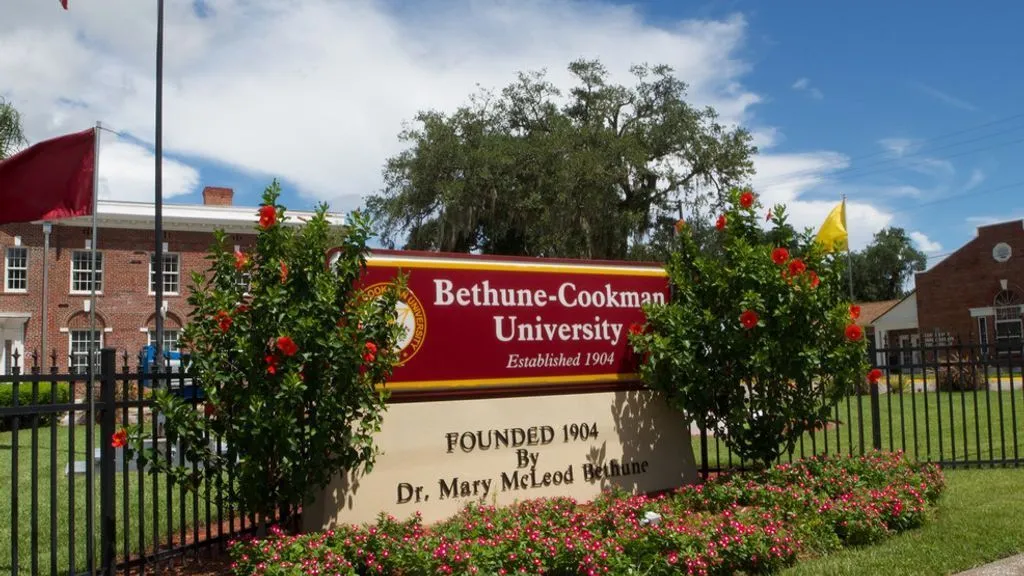 Photo: Bethune-Cookman College, via cbs12.com
From the Schoolhouse to the White House
Bethune's influence did not stop at the campus gates. She became one of the most prominent Black women in America, and she used that prominence with the same focused intentionality she'd used to build her school.
During the New Deal, President Franklin D. Roosevelt appointed her director of the Division of Negro Affairs within the National Youth Administration — making her the first Black woman to lead a federal agency. She assembled what became known as Roosevelt's "Black Cabinet" — a group of African American advisors who worked to ensure that New Deal programs reached Black communities.
She founded the National Council of Negro Women in 1935, an organization that would go on to represent millions of American women. She advised four U.S. presidents. She wrote, she organized, she testified, she pushed.
And she never forgot where she came from. The child who had been told she couldn't read built a legacy that put hundreds of thousands of people in classrooms.
What Absence Taught Her to Build
There's a particular kind of clarity that comes from being denied something fundamental. Not always — deprivation more often produces damage than wisdom. But in Bethune's case, the exclusion she experienced became a precise map of exactly what was missing and exactly where it needed to go.
She knew what it felt like to reach for a book and have it pulled away. She knew what it felt like to be told, implicitly and explicitly, that knowledge was not meant for someone like her. And she spent her entire adult life making sure that fewer and fewer people would have to know that feeling.
She built schools because nobody had built them for her. She trained teachers because there hadn't been enough to teach her. She pushed her way into federal policy because the people making decisions had never lived the life she'd lived and couldn't see what she could see.
The Woman the Dump Couldn't Hold
Mary McLeod Bethune died in 1955, at age 79, having outlived most of the barriers that were supposed to contain her. In 1974, a statue of her was erected in Lincoln Park in Washington, D.C. — the first statue of a Black American or a woman to be placed in a D.C. public park.
She is depicted handing her legacy to two children. Her cane is at her side. She is leaning forward.
She always was.
The sharecropper's daughter who started with elderberry ink and a rented house near a garbage dump ended up reshaping American education, federal policy, and the institutional architecture of Black civic life in the 20th century. Not because the system made room for her. Because she made room for herself — and then kept making room until there was enough for everyone she could reach.
That's not an accident of history. That's what it looks like when someone decides that the word no is just the beginning of the conversation.