The Woman Who Took $5,000 and Rewrote What American Education Could Be
Photo: Aart Rietveld, CC BY-SA 4.0, via Wikimedia Commons
The most revolutionary thing Marva Collins ever did was believe a child. Not one particular child — though she did that, over and over, with a consistency that bordered on the stubborn. She believed all of them. The ones who had been labeled slow. The ones who had been told they were unteachable, unreachable, not worth the investment of a good teacher's time. She believed them the way you believe in something you've staked your own money on — because eventually, she did exactly that.
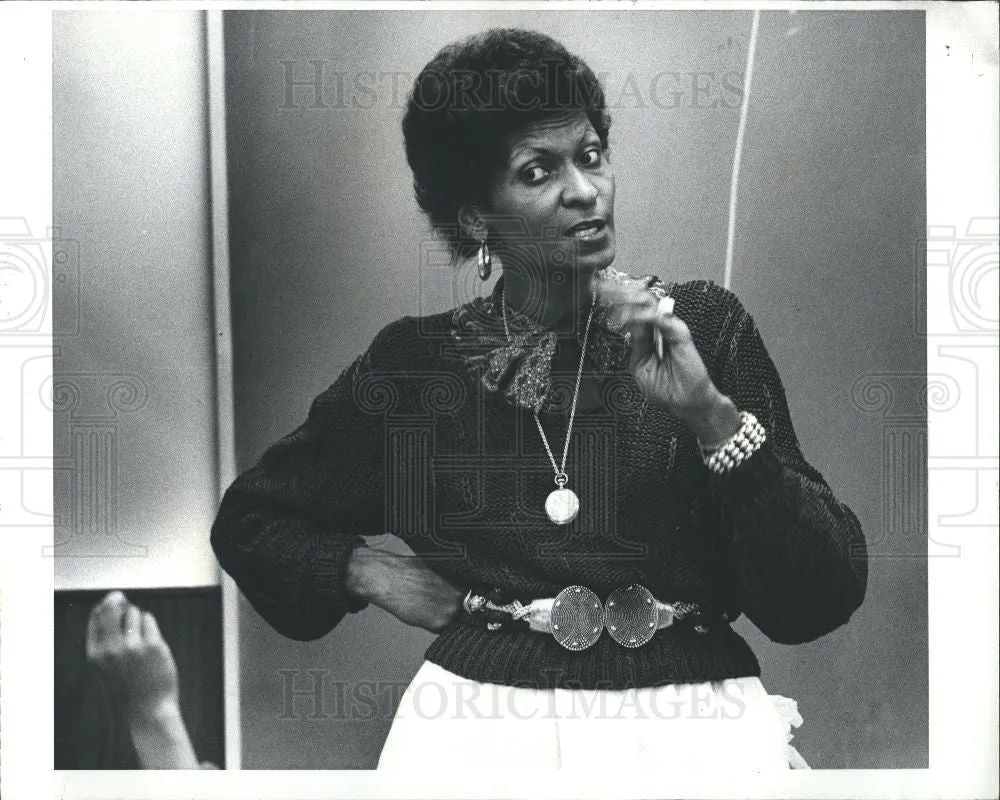 Photo: Marva Collins, via historicimages.com
In 1975, Marva Collins cashed out her own teacher's retirement fund, took $5,000, and opened a school in her Chicago home. What she built there would eventually embarrass a system, inspire a nation, and produce students that Harvard and Yale would compete to recruit. None of it was supposed to happen. All of it made perfect sense if you knew where she came from.
A Ceiling Built Into the Curriculum
Marva Collins was born in 1936 in Monroeville, Alabama — a small town that most Americans would never find on a map. It was the kind of place where the rules of segregation weren't just social customs; they were embedded in the architecture of daily life. Black children attended separate schools with separate — which meant lesser — everything. The message wasn't subtle. It was written into the funding allocations, the hand-me-down textbooks, the teacher assignments, the expectations.
What saved Collins, by her own account, was a father who refused to accept those expectations as final. Henry Knight Collins ran a small business, read constantly, and told his daughter with absolute regularity that she was capable of anything. In a world designed to tell her otherwise, that voice became the foundation of everything she would later build.
She went to Clark College in Atlanta, earned her degree, married, and eventually moved to Chicago, where she began teaching in the public school system in the 1960s. She was good at it immediately. She was also, almost immediately, frustrated.
The System's Favorite Excuse
Chicago's public schools in the 1960s and 1970s were not short on problems. Overcrowding, underfunding, and a bureaucratic culture that had quietly made peace with failure were facts of life in many of the city's lower-income neighborhoods, particularly those serving Black families on the West Side. Children who struggled academically were often diagnosed with learning disabilities, funneled into remedial tracks, and written off with the paperwork to prove it.
Collins watched this happen and grew increasingly unwilling to participate. She believed — and she was not quiet about believing — that most of what the system called unteachable was actually untaught. That the children being labeled as incapable were being failed by methods, not limited by minds. This was not a popular opinion in faculty meetings.
She tried to change things from inside. She pushed. She argued. She redesigned her own classroom over and over, pulling in classical literature, Socratic questioning, and a relentless insistence that her students could handle material that the curriculum had decided was above them. She had second-graders reading Shakespeare — not as a stunt, but because she believed they were ready and nobody had ever tried.
Eventually, she ran out of room to maneuver inside the system. So she stepped outside it entirely.
The $5,000 Classroom That Changed Everything
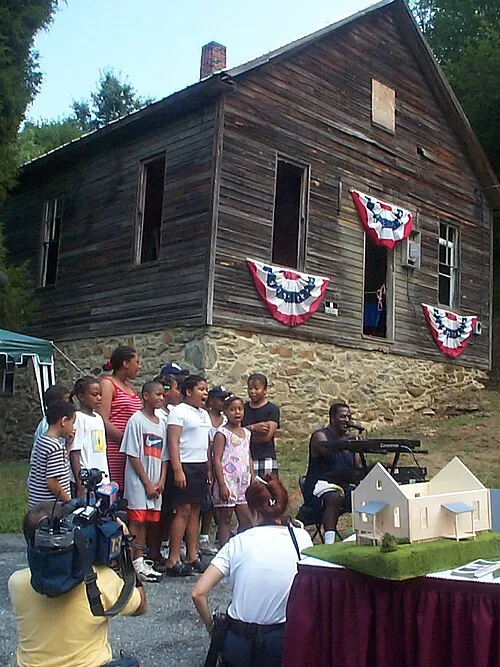
In 1975, Collins founded Westside Preparatory School in the second floor of her Chicago home in the Garfield Park neighborhood. She started with her own children and a handful of students the public schools had already given up on — kids who arrived carrying official documentation of their failures, labels that were meant to explain why they couldn't be expected to learn much.
 Photo: Westside Preparatory School, via d30px55al4oyj4.cloudfront.net
Collins ignored the labels. She taught Tolstoy and Emerson to children who had been told they were reading below grade level. She used the Socratic method with kids who had been seated in the back of classrooms and forgotten. She held every student to a standard that most of their previous teachers had never attempted, and she did it with a warmth and tenacity that made the standard feel like an invitation rather than a threat.
The results were, depending on your prior assumptions, either miraculous or completely predictable. Students who had been written off as remedial cases were reading years above grade level within months. Children who had been told they were learning disabled were completing work that would challenge students at well-resourced suburban schools. Word spread. Enrollment grew. The second floor of a Chicago rowhouse became one of the most talked-about educational experiments in the country.
The Establishment Gets Uncomfortable
Success, when it happens in the wrong place, makes institutions nervous. The Chicago public school system was not effusive in its praise of what Collins was doing. If a woman with $5,000 and a second floor could produce results that a billion-dollar bureaucracy couldn't, the implications were uncomfortable for everyone drawing a salary from that bureaucracy.
But the students kept performing. Graduates of Westside Prep went on to colleges — good ones, competitive ones, the kind that required application essays and entrance exams and all the credentials that nobody had expected these particular children to accumulate. The school became a subject of national media coverage. In 1981, CBS aired a television movie about Collins's work, with Cicely Tyson playing her — the kind of cultural recognition usually reserved for stories that are already over. Collins's story was just getting started.
Presidents noticed. Ronald Reagan offered her the position of Secretary of Education in 1981. She turned it down. She had a school to run, and she had no interest in trading a classroom for a cabinet post. George H.W. Bush later gave her the National Humanities Medal. She accepted that one.
The Philosophy That Outlasted the Doubters
What Collins built was not just a school. It was a proof of concept — a demonstration, conducted in real time with real children, that the limiting factor in American education was rarely the student. It was the expectation.
Her philosophy drew on classical education, on the belief that children were not empty vessels to be filled with information but active minds to be challenged and respected. She believed in high standards not as instruments of exclusion but as expressions of faith — that demanding more from a child was, at its core, an act of love. That telling a kid they were capable of Shakespeare was more honest, and more useful, than telling them to stay within their lane.
Marva Collins died in 2015. Westside Preparatory School had closed years earlier, a casualty of funding challenges and the particular difficulty of sustaining a single founder's vision across time. But the philosophy didn't close with it. It traveled through the teachers she trained, the books she wrote, the lectures she gave, and the thousands of students who went on to live lives that the Chicago public school system had quietly decided they weren't going to have.
She never needed a mandate from a school board. She never waited for a curriculum committee to sign off on her methods. She took $5,000, walked upstairs, and decided that no child in her presence was going to be told they had limits.
That turned out to be enough to change everything.