The Sharecropper's Daughter Who Shook the Democratic Party: How Fannie Lou Hamer Changed America Without Ever Really Leaving Home
The Sharecropper's Daughter Who Shook the Democratic Party: How Fannie Lou Hamer Changed America Without Ever Really Leaving Home
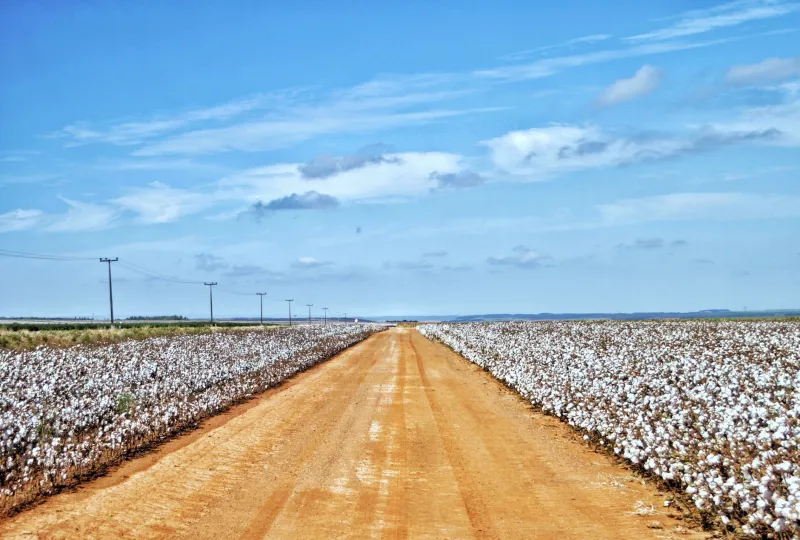
Sunflower County, Mississippi, in the middle of the twentieth century was a place designed to keep certain people small. The cotton fields stretched flat and endless under a brutal Delta sun, and the system that governed them — sharecropping, debt, terror, and the constant threat of violence — was engineered to ensure that the Black families who worked that land would never accumulate enough power, money, or mobility to challenge the people who owned it.
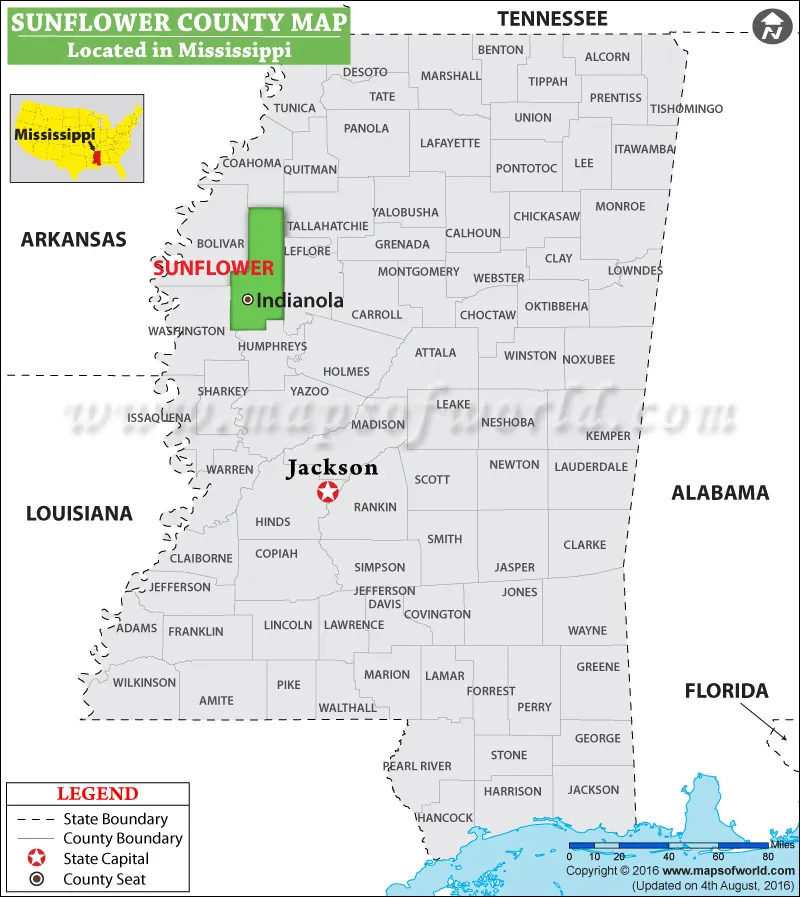 Photo: Sunflower County, Mississippi, via images.mapsofworld.com
Fannie Lou Hamer was born into that system in 1917, the twentieth child of sharecropper parents. She started picking cotton at six years old. She never finished high school. She spent decades on a plantation in Ruleville, Mississippi, doing work that the people who benefited from it preferred not to think about too hard. By almost any measure the outside world used to assess a person's influence, she had none.
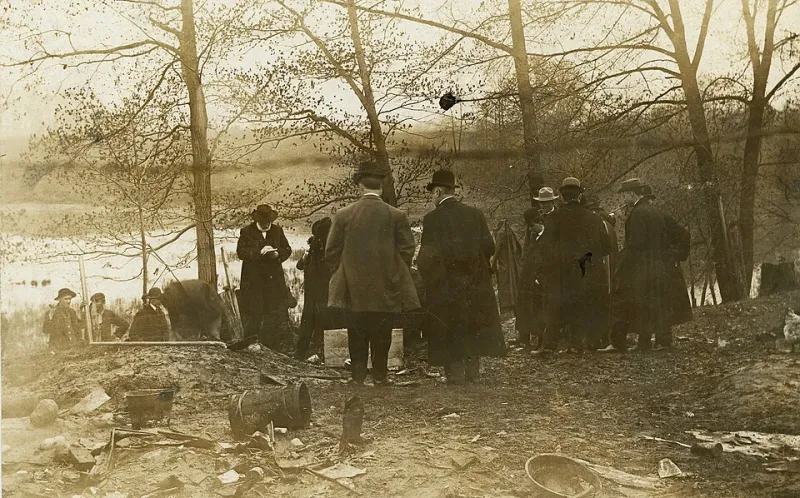
And then, in the summer of 1964, she sat down in front of a television camera at the Democratic National Convention in Atlantic City, New Jersey, and told the truth so plainly and so devastatingly that the President of the United States ordered the networks to cut away from her live testimony because he was afraid of what it might do.
 Photo: Atlantic City, New Jersey, via thumbs.dreamstime.com
Lyndon Johnson was right to be afraid.
The Education You Get When Nobody's Teaching You
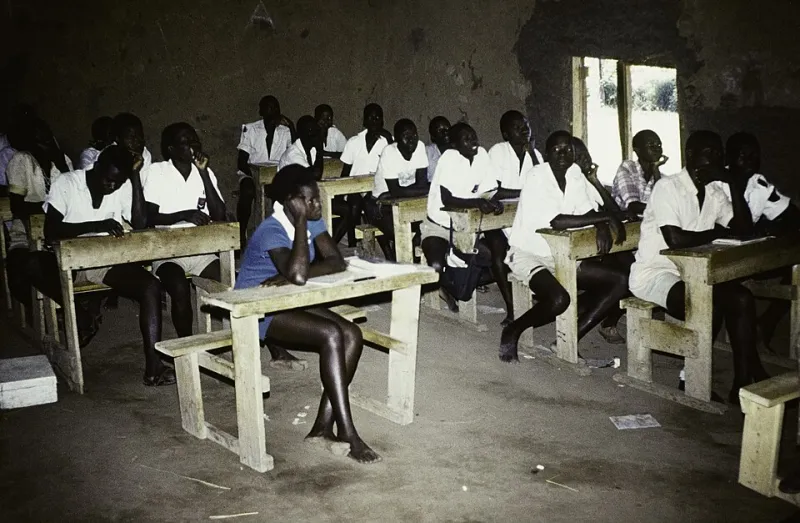
Hamer's formal schooling ended early, as it did for most Black children in the Jim Crow South, where education was systematically underfunded and where the economic structure of sharecropping required children's labor year-round. What she received instead was a different kind of education — one delivered by the land itself, by the community that sustained her, and by the specific texture of injustice as it operated in one particular county of one particular state.
She knew Sunflower County the way you only know a place when you've never had the option of leaving it. She knew which families were struggling and why. She knew the names of the men who ran the system and the names of the people it ground down. She knew the rhythms of intimidation — the quiet threats, the sudden violence, the economic retaliation that could cost a family everything for the act of registering to vote.
This knowledge, intimate and specific and hard-won, was not the kind that came with credentials. But it turned out to be exactly the kind that could not be faked.
The Day Everything Changed
In August of 1962, a Student Nonviolent Coordinating Committee (SNCC) organizer came to a church meeting in Ruleville and explained that Black citizens had the constitutional right to vote — and that the only thing stopping them from exercising it was going to the courthouse and registering. Hamer was forty-four years old. She had lived her entire life in Mississippi and had never heard this presented as a real and available option.
She volunteered to go. She went to the Sunflower County courthouse in Indianola with seventeen other people. She was turned away. When she returned to the plantation where she worked, her employer told her she had to withdraw her registration attempt or leave. She left that same night.
She was shot at. Her family was harassed. She was arrested on a bus trip with civil rights workers in Winona, Mississippi, and beaten so severely in the county jail that she sustained permanent kidney damage and a blood clot behind one eye. She was in her mid-forties, a Black woman in the Deep South with no money, no political connections, and no institutional protection of any kind.
She kept going.
Atlantic City, 1964
By the summer of 1964, Hamer had become a central figure in the Mississippi Freedom Democratic Party — a parallel political organization formed because the regular Mississippi Democratic Party systematically excluded Black voters. The MFDP traveled to the Democratic National Convention in Atlantic City to challenge the credentials of the all-white Mississippi delegation and demand that their votes be counted.
Hamer testified before the Credentials Committee on national television. She described what had been done to her in the Winona jail. She described what had been done to her neighbors for the act of trying to vote. She spoke without notes, without rhetorical flourish, without the careful language of someone who had been media-trained. She spoke like someone who had been there.
"Is this America?" she asked. "The land of the free and the home of the brave, where we have to sleep with our telephones off the hooks because our lives be threatened daily, because we want to live as decent human beings in America?"
President Johnson, watching from the White House, called an emergency press conference to pull the cameras away from her. It didn't work. The networks replayed her testimony that evening. The country saw it anyway.
The Power of Staying Put
What made Hamer's voice so impossible to dismiss — and so difficult for the political establishment to manage — was precisely the thing that looked, from the outside, like limitation. She wasn't a national figure who had parachuted into Mississippi to make a point. She was Mississippi. She was Sunflower County. She was the cotton fields and the unpaved roads and the jail cell in Winona. She had not come from somewhere else to speak on behalf of people she'd studied. She was one of those people, and she had the scars to prove it.
That rootedness gave her a moral authority that no amount of education, money, or political sophistication could manufacture. When she spoke, there was no gap between the testimony and the witness. She was both.
The MFDP did not win their credentials fight in 1964. But the Democratic Party, shaken by what had happened in Atlantic City, began a reform process that eventually transformed how presidential nominees were chosen — dramatically increasing the representation of Black voters, women, and marginalized communities in the party's delegate structure. The modern Democratic primary system, for all its imperfections, is a direct descendant of what Fannie Lou Hamer started in a Mississippi church in 1962.
What She Left Behind
Hamer spent the rest of her life in the Delta. She ran for Congress twice and lost. She founded a cooperative farm that provided food and income for poor families in Sunflower County. She kept organizing, kept speaking, kept showing up. She died in 1977 at sixty years old, worn down by poverty, health problems, and the accumulated weight of a life spent fighting in one of the hardest places in America.
Her gravestone in Ruleville reads: "I'm sick and tired of being sick and tired." It's a line from a speech she gave in 1964, and it carries, even now, a force that most political speeches never achieve.
She never really left home. She didn't need to. The world, eventually, had to come to her — and when it did, what it found was someone who had been preparing her whole life to tell it exactly what it needed to hear.