From Barking Orders to Brushing Canvas: The Sergeant Who Discovered Kindness Could Build an Empire
The Man Who Swore Off Shouting
For two decades, Master Sergeant Robert Norman Ross made grown men cry. It was his job. In the Air Force, Ross was what they called a "military training instructor" — the guy who turned soft civilians into disciplined airmen through a carefully orchestrated campaign of controlled psychological pressure. He was good at it, maybe too good.
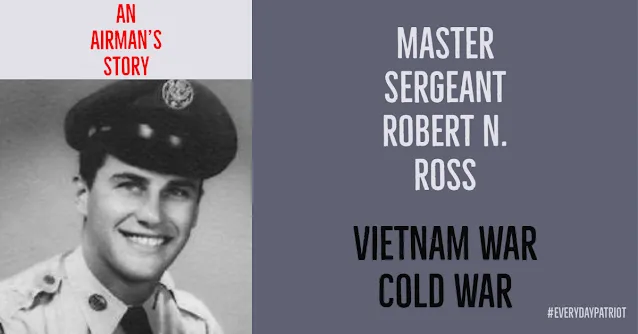 Photo: Master Sergeant Robert Norman Ross, via 1.bp.blogspot.com
By 1981, Ross had spent half his life perfecting the art of intimidation. He knew exactly how to strip a person down to nothing with his voice alone, then build them back up into something the military could use. But somewhere along the way, he'd grown to hate the sound of his own anger.
When Ross finally retired from active duty, he made himself a promise that would seem laughable to anyone who knew the hard-edged sergeant: he would never raise his voice in anger again. What happened next accidentally created the most soothing presence on American television.
The Accidental Artist
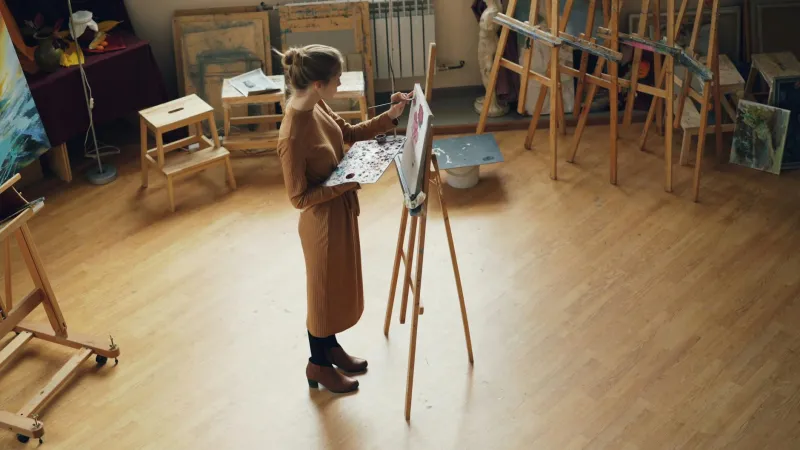
Ross had been painting since his teens — a quiet hobby that provided refuge from the chaos of military life. During his years stationed in Alaska, he'd discovered something called "wet-on-wet" painting, a technique that allowed him to capture the territory's dramatic landscapes quickly, before the light changed or the weather turned.
What started as a way to kill time became something more urgent. While Ross was learning to break down recruits during the day, he was teaching himself to build up beauty in the evenings. The contrast wasn't lost on him.
When he left the military, Ross figured he might make a living teaching art classes. He had no grand vision, no business plan. He just knew he wanted to spend his days helping people create something instead of watching them fall apart.
The Revolution Nobody Saw Coming
In 1983, a small public television station in Muncie, Indiana, gave Ross a chance to film a pilot episode of something called "The Joy of Painting." The concept was simple: thirty minutes of watching a soft-spoken man with a magnificent afro turn a blank canvas into a complete landscape using nothing but encouragement and what he called "happy little accidents."
 Photo: Muncie, Indiana, via www.travelindiana.com
Television executives didn't know what to make of it. This wasn't educational programming as they understood it. Ross wasn't teaching technique so much as teaching permission — permission to try, to fail, to try again without judgment.
But viewers understood immediately. Here was someone who spoke to them the way they wished they could speak to themselves. Where the world demanded perfection, Ross celebrated mistakes. Where others saw failure, he saw "happy little trees that just needed friends."
The Business of Kindness
What Ross had stumbled onto was bigger than art instruction. He'd discovered that Americans were starving for gentleness, for a voice that didn't demand anything from them except the willingness to pick up a brush.
"The Joy of Painting" ran for eleven years and 403 episodes. Ross painted over 1,000 landscapes on camera, never once repeating a scene. But the real product wasn't paintings — it was the feeling that maybe you weren't as hopeless as you thought.
Ross built his empire on the radical idea that everyone could create beauty, that talent was less important than kindness, and that the process mattered more than the product. He sold art supplies, taught workshops, and licensed his image, but always with the same underlying message: you're capable of more than you know.
The Gentle Revolutionary
By the 1990s, Ross had become something unprecedented in American culture — a celebrity whose entire brand was built on making other people feel better about themselves. He never criticized anyone's work, never showed impatience, never suggested that some people simply weren't cut out for art.
This wasn't just nice guy behavior. This was strategic rebellion against everything Ross had learned about motivation during his military career. He'd spent twenty years proving that fear could make people perform. Now he was proving that encouragement could make them soar.
The former drill sergeant had discovered that building people up was infinitely more powerful than tearing them down. And unlike military discipline, which only worked under pressure, confidence was something people could carry with them long after the cameras stopped rolling.
The Legacy of Happy Accidents
Ross died in 1995, but his influence on American culture continues to grow. His show streams on Netflix, his clips go viral on social media, and his philosophy of "happy little accidents" has become shorthand for resilience.
More importantly, Ross proved that kindness could be commercially successful, that gentleness could build an empire, and that sometimes the life you're trying to escape hands you exactly the life you were meant to live.
The man who spent two decades teaching people to follow orders had accidentally taught millions of Americans something more valuable: how to be gentle with themselves. In a culture that often mistakes cruelty for strength, Bob Ross showed that the real power lies in helping others discover what they're capable of creating.