The Sound That Built Rock and Roll
If you've ever wondered what rock and roll sounded like before anyone called it rock and roll, you need to hear Sister Rosetta Tharpe playing "Strange Things Happening Every Day" in 1944. The recording is raw, electric, and decades ahead of its time—a Black woman with a guitar, singing gospel with a backbeat that wouldn't become mainstream until white musicians discovered it ten years later.
But here's what makes Tharpe's story extraordinary: she didn't just pioneer a new sound by accident. She invented it out of necessity, because poverty had locked her out of every conventional path to musical success.
When You Can't Afford the Rules
Rosetta Nubin was born in Cotton Plant, Arkansas, in 1915, to a mother who played mandolin and a father who wasn't around much. The family moved to Chicago when Rosetta was six, chasing the promise of steady work and better schools. What they found instead was the Great Depression, which hit Black families first and hardest.
Music lessons were out of the question. A decent piano was impossible. Even a guitar from the Sears catalog cost more than most families made in a month. So Rosetta learned to make music with whatever was available: washboards, spoons, her mother's old mandolin, and eventually a battered acoustic guitar that someone had thrown away.
But here's where poverty became innovation: because Rosetta couldn't afford formal training, she never learned what she wasn't supposed to do. She tuned her guitar to whatever sounded right to her ear. She played chords that weren't in any songbook. She mixed gospel and blues in ways that would have scandalized music teachers—if she'd ever had music teachers.
By the time she was fourteen, Rosetta was performing in Chicago churches, playing a style of music that didn't have a name yet. It was too bluesy for traditional gospel, too sacred for the juke joints, and too rhythmic for anything white audiences had ever heard.
The Instrument That Didn't Exist
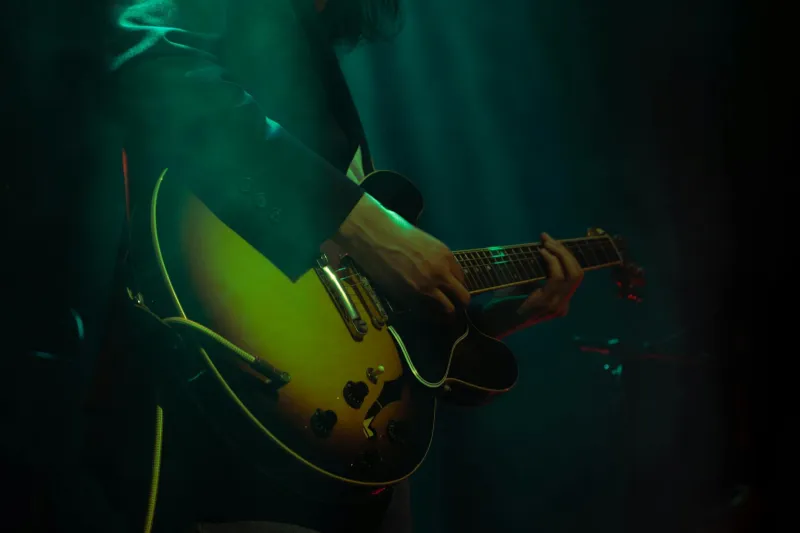
In 1938, Rosetta did something that changed American music forever: she plugged in. Electric guitars existed, but nobody was using them for gospel music. The church folks thought amplification was worldly. The blues musicians thought gospel was too restrictive. Rosetta thought both groups were missing the point.
She bought a used electric guitar with money she'd saved from church performances, then spent months figuring out how to make it work in spaces that had never heard amplified music. She developed a playing style that was part Chuck Berry (before Chuck Berry existed), part gospel preacher, and part something entirely her own.
The sound she created was revolutionary: clean, percussive, and rhythmic in a way that made people want to dance, even in church. She played single-note runs that wouldn't be called "rock and roll guitar solos" for another decade. She used distortion and feedback as musical elements before anyone had names for those techniques.
Most importantly, she figured out how to make an electric guitar sound like a full band. Because she couldn't afford backup musicians, she learned to play bass lines, rhythm parts, and lead melodies simultaneously. The technique she developed out of financial necessity became the foundation of modern rock guitar.
The Revolution Nobody Noticed
By 1940, Sister Rosetta Tharpe was selling records, filling concert halls, and inspiring musicians across America. She was one of the first gospel artists to perform in nightclubs, one of the first Black women to play electric guitar as a lead instrument, and probably the first person to make music that sounded like what we now call rock and roll.
But she was also a Black woman playing music that didn't fit into any established category. The gospel world was suspicious of her secular venues. The blues world didn't know what to do with her religious lyrics. The white music industry was interested in her sound but not her face.
So something predictable happened: her innovations were absorbed, refined, and repackaged by people who could navigate the music industry more easily. Elvis Presley acknowledged her influence, but most of his fans never heard her name. Chuck Berry built on her guitar techniques, but the music press called him the inventor of rock and roll. The Beatles covered songs she had popularized, but the songwriting credits went elsewhere.
Tharpe kept performing, kept innovating, and kept inspiring other musicians. But as rock and roll became a mainstream phenomenon, her role in creating it was quietly erased from the official history.
The Economics of Erasure
This wasn't just about racism or sexism—though it was certainly both. It was about how the music industry has always worked: innovations bubble up from people who can't afford to protect their intellectual property, then get commercialized by people who can afford lawyers, marketing budgets, and distribution networks.
Tharpe's story is repeated across American music history. The blues artists who created the foundation of rock music rarely saw royalties from the songs they wrote. The jazz musicians who invented bebop watched white bandleaders get rich playing watered-down versions of their innovations. The hip-hop producers who created entire new genres often found their work sampled, copied, and commercialized without credit or compensation.
But Tharpe's case is especially striking because her innovations were so fundamental. She didn't just influence rock and roll—she essentially invented it, fifteen years before anyone called it that. She developed the guitar techniques, the rhythmic patterns, and the performance style that defined a genre. Then she watched other people become famous for discovering what she had created.
What Poverty Teaches About Creativity
There's a lesson in Tharpe's story that goes beyond music history: sometimes limitation breeds innovation in ways that abundance never could. Because Tharpe couldn't afford conventional training, she developed unconventional techniques. Because she couldn't hire backup musicians, she learned to create the sound of a full band with one instrument. Because she couldn't fit into existing musical categories, she invented new ones.
This isn't an argument for keeping people in poverty—that's both cruel and counterproductive. But it is an argument for understanding that some of our most important innovations come from people who are forced to solve problems that comfortable people never encounter.
The music industry's tendency to overlook its real innovators isn't just unfair—it's economically stupid. By the time mainstream institutions recognize revolutionary sounds, those sounds have usually been refined, commercialized, and stripped of their original power. The real breakthroughs are happening in places where people can't afford to follow the rules, because they're too busy inventing new ones.
The Sound We're Still Catching Up To
Sister Rosetta Tharpe died in 1973, largely forgotten by the music industry she had helped create. In recent years, there's been a movement to restore her place in music history—she was inducted into the Rock and Roll Hall of Fame in 2018, forty-five years after her death.
But recognition isn't the same as understanding. Tharpe's real legacy isn't just that she influenced rock and roll—it's that she proved creativity flourishes most when it's freed from conventional expectations. Her poverty didn't limit her music; it liberated it from the constraints that kept other musicians playing it safe.
Today, when we talk about innovation in music, we often focus on technology, marketing, and industry connections. Tharpe's story suggests we should be paying attention to different things: the musicians who can't afford to follow the rules, the sounds coming from places the industry doesn't usually look, and the innovations happening in communities that mainstream culture hasn't discovered yet.
Somewhere right now, there's probably another Sister Rosetta Tharpe, creating tomorrow's sound on yesterday's equipment, in a place where nobody expects genius to live. The question isn't whether that innovation is happening—it's whether we'll recognize it before someone else gets famous for discovering it.