The Problem That Wouldn't Go Away
In 1937, John Vincent Atanasoff had a problem that was driving him crazy. As a physics professor at Iowa State University, he was drowning in calculations that took forever to solve by hand. Linear equations with dozens of variables. Mathematical problems that consumed entire weekends and still produced questionable results.
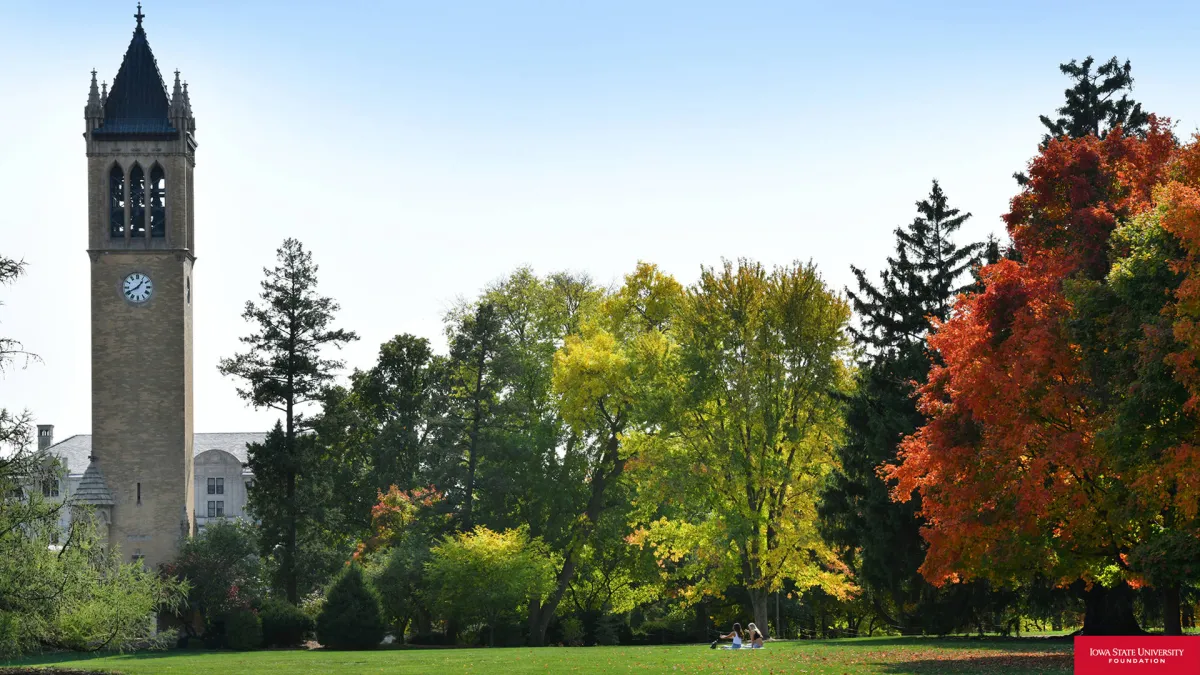 Photo: Iowa State University, via wallpapers.com
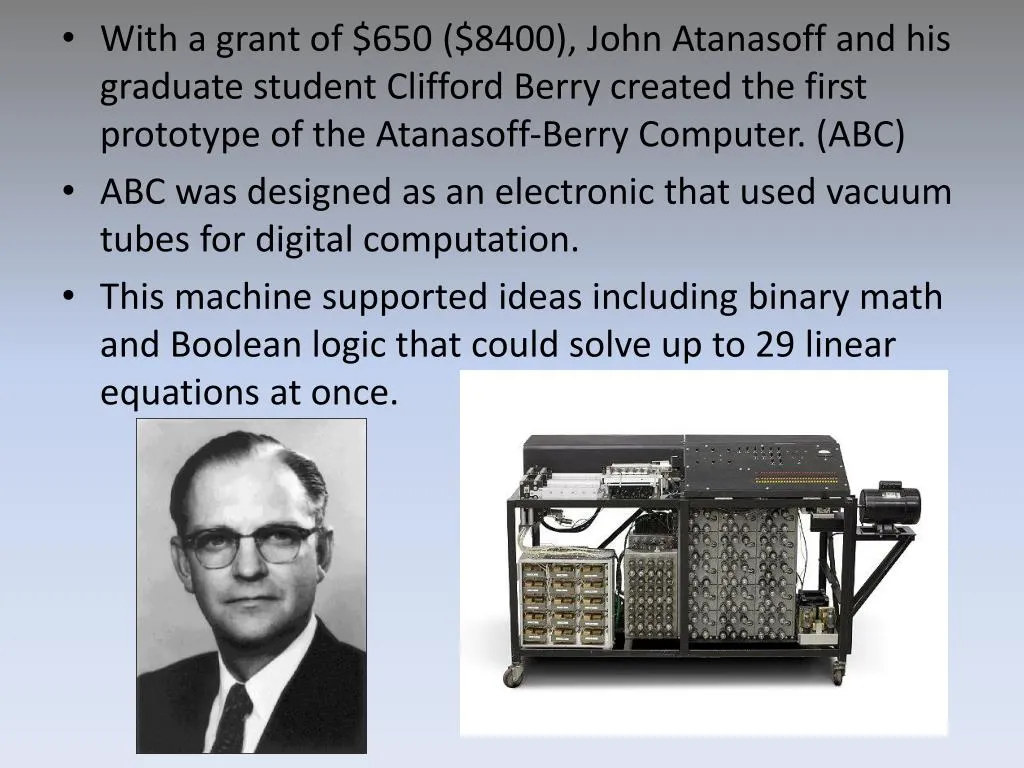 Photo: John Vincent Atanasoff, via image1.slideserve.com
Atanasoff wasn't supposed to be thinking about computing machines. He was supposed to be teaching physics to farm kids from small Iowa towns. But sitting in his cramped university office, watching his graduate students struggle through the same tedious calculations that plagued him, he couldn't shake the feeling that there had to be a better way.
The son of a Bulgarian immigrant father and an Iowa-born mother, Atanasoff had grown up fixing farm equipment and tinkering with electrical devices in Hamilton County. His childhood was spent between two worlds—the old-country precision his father demanded and the practical problem-solving that rural Iowa required. That combination would prove more valuable than any computer science degree.
The Drive That Changed Everything
On a cold December evening in 1937, Atanasoff climbed into his car and started driving. He had no destination in mind—just a head full of mathematical frustration and a tank of gas. Hours later, he found himself 200 miles away in an Illinois roadhouse, nursing a drink and sketching ideas on whatever paper he could find.
Somewhere between Iowa City and that anonymous tavern, the basic principles of electronic digital computing crystallized in his mind. Binary numbers instead of decimal. Electronic switches instead of mechanical gears. Memory that could store both numbers and instructions.
He drove home that night with the blueprint for the modern computer scattered across cocktail napkins and envelope backs.
Building Tomorrow in a Basement
What Atanasoff did next was remarkable for its simplicity. Instead of seeking massive funding or assembling a team of experts, he walked into Iowa State's administration office and asked for $650 to build a prototype. That was it. No business plan, no venture capital, no Silicon Valley connections.
Just a physics professor with an idea and a graduate student named Clifford Berry who knew how to solder.
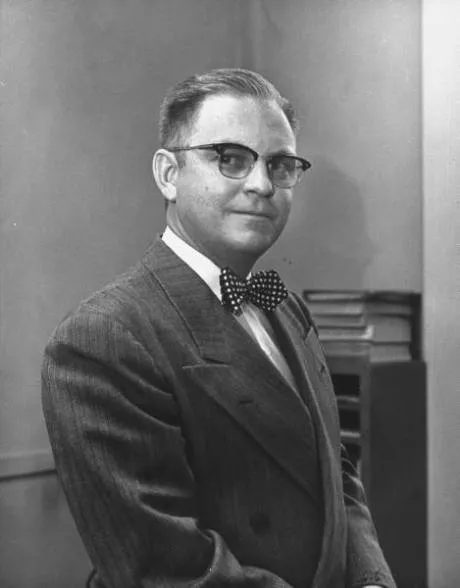 Photo: Clifford Berry, via 2.bp.blogspot.com
They set up shop in the basement of the physics building, working with vacuum tubes, capacitors, and a rotating drum memory system that Atanasoff designed himself. The Atanasoff-Berry Computer, as it would later be known, was the size of a desk and could solve systems of linear equations faster than any human mathematician.
By 1942, they had a working machine that could perform calculations automatically, store intermediate results, and operate without human intervention once started. It was, by any reasonable definition, the world's first electronic digital computer.
Then World War II happened, and everything changed.
The Credit That Never Came
Atanasoff was called away to work on naval ordnance during the war. His computer sat in that Iowa basement, largely forgotten. When he returned, Iowa State had lost interest in the project. The machine was eventually dismantled, its parts scattered or discarded.
Meanwhile, other inventors were building on similar principles. ENIAC, completed in 1946, received massive publicity and is often credited as the first computer. Its creators became household names. Atanasoff remained a physics professor in Iowa.
For decades, computing history books barely mentioned his name. When they did, it was usually as a footnote—an interesting early experiment that didn't lead anywhere significant.
The Legal Battle That Rewrote History
The truth didn't emerge until the 1970s, during a patent dispute between computer giants Honeywell and Sperry Rand. As lawyers dug through the early history of computing, they discovered something remarkable: detailed documentation of Atanasoff's work, predating other famous computers by years.
John Mauchly, one of ENIAC's creators, had actually visited Atanasoff in Iowa in 1941. He had seen the computer, discussed its principles, and taken notes. The legal evidence suggested that many of ENIAC's innovations weren't so innovative after all.
In 1973, a federal judge ruled that Atanasoff, not the ENIAC team, deserved credit for inventing the electronic digital computer. The decision made headlines, but by then, most people had never heard of the Iowa physics professor who had started it all.
What We Lost in the Basement
Atanasoff's story isn't just about missed recognition—it's about how we think about innovation itself. His approach was everything Silicon Valley mythology isn't: quiet, methodical, uninterested in publicity or profit. He built the first computer not to start a company or change the world, but to solve a specific problem that was bothering him.
He worked without venture capital, without a team of experts, without even much institutional support. He succeeded because he understood both the theoretical principles and the practical realities of building things—a combination his rural Iowa background had given him.
When Atanasoff died in 1995, personal computers were in millions of American homes. The internet was beginning to transform daily life. The digital revolution he had started in a university basement was reshaping human civilization.
Most of the obituaries still spelled his name wrong.
The Lesson from Nowhere
John Atanasoff's story suggests something profound about where breakthrough ideas actually come from. Not from well-funded laboratories or prestigious universities, but from individuals wrestling with specific problems in unremarkable places.
The first computer wasn't born in Silicon Valley or MIT. It was invented by a professor from nowhere special, working in a basement nobody cared about, with funding that wouldn't buy a decent laptop today.
Sometimes the most important revolutions start so quietly that nobody notices until decades later. Sometimes the future gets built by people who aren't trying to build the future—just trying to solve the problem right in front of them.
And sometimes, the greatest innovations come from the most unlikely places, by people who never expected to change the world at all.