
The Accountant Who Reinvented Football
Paul Brown never played college football. He was too small, too slow, and too focused on his studies at Miami University in Ohio. While his classmates were earning letters on the gridiron, Brown was working part-time jobs and studying to become a teacher.
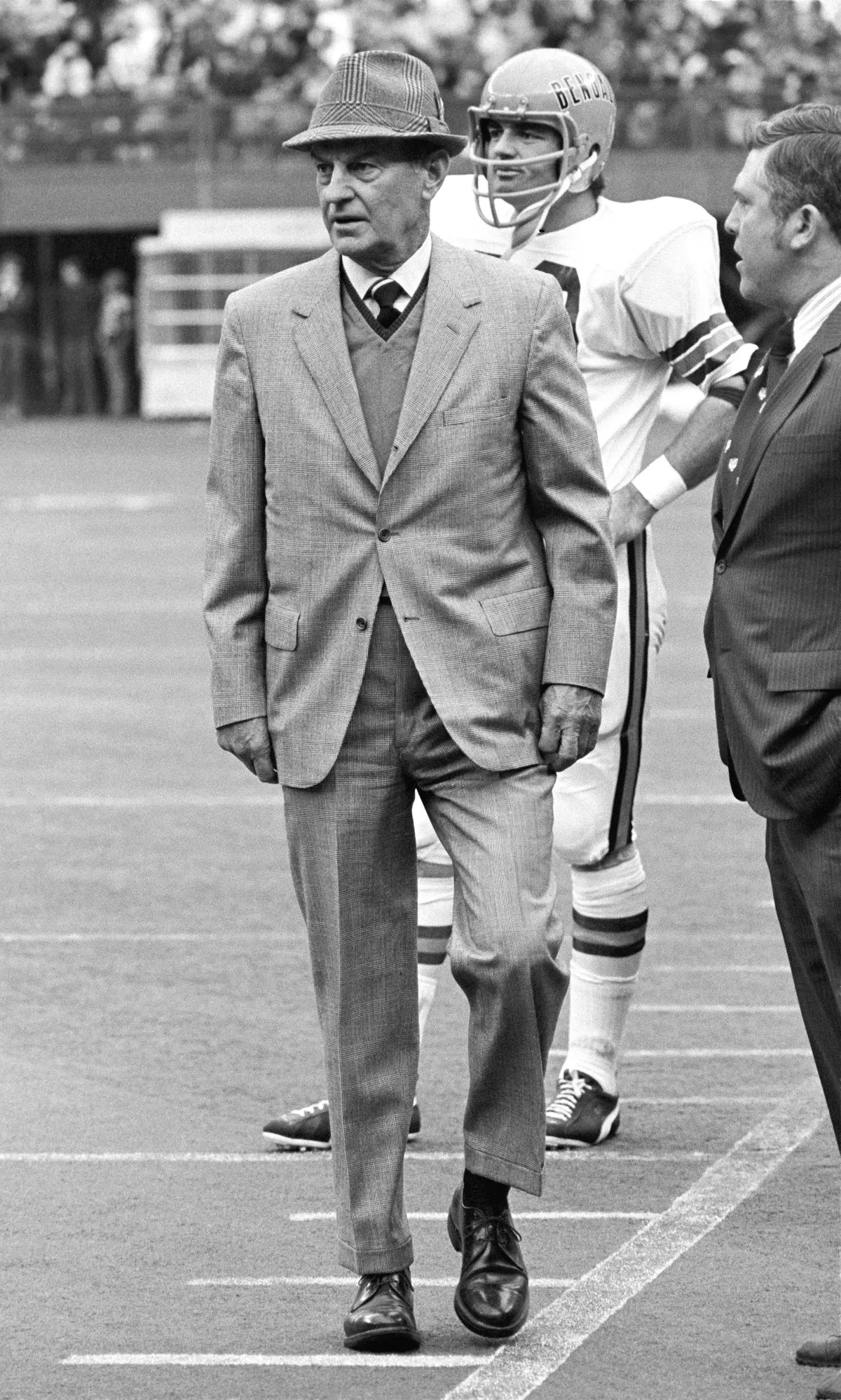 Photo: Paul Brown, via a.espncdn.com
By the time he died in 1991, Brown had revolutionized professional football more than any player who ever suited up.
Brown approached football like a business problem that needed systematic solutions. He was the first coach to use playbooks, the first to study game film extensively, and the first to develop detailed scouting reports on opponents. He invented the face mask, created the modern passing offense, and established the first comprehensive training programs for professional athletes.
His outsider perspective allowed him to see football as a series of strategic problems rather than a test of individual heroics. Because he had never been immersed in football culture as a player, he wasn't bound by conventional wisdom about how the game "should" be played.
The Cleveland Browns, named in his honor, dominated the All-America Football Conference and early NFL precisely because Brown treated football like a science project that could be optimized through careful analysis and systematic improvement.
The Professor Who Taught Basketball to Think
John Wooden played basketball at Purdue, but he was never a star. He was a solid point guard who understood the game intellectually but lacked the physical gifts that defined elite players. When his playing career ended, most people expected him to disappear into high school coaching obscurity.
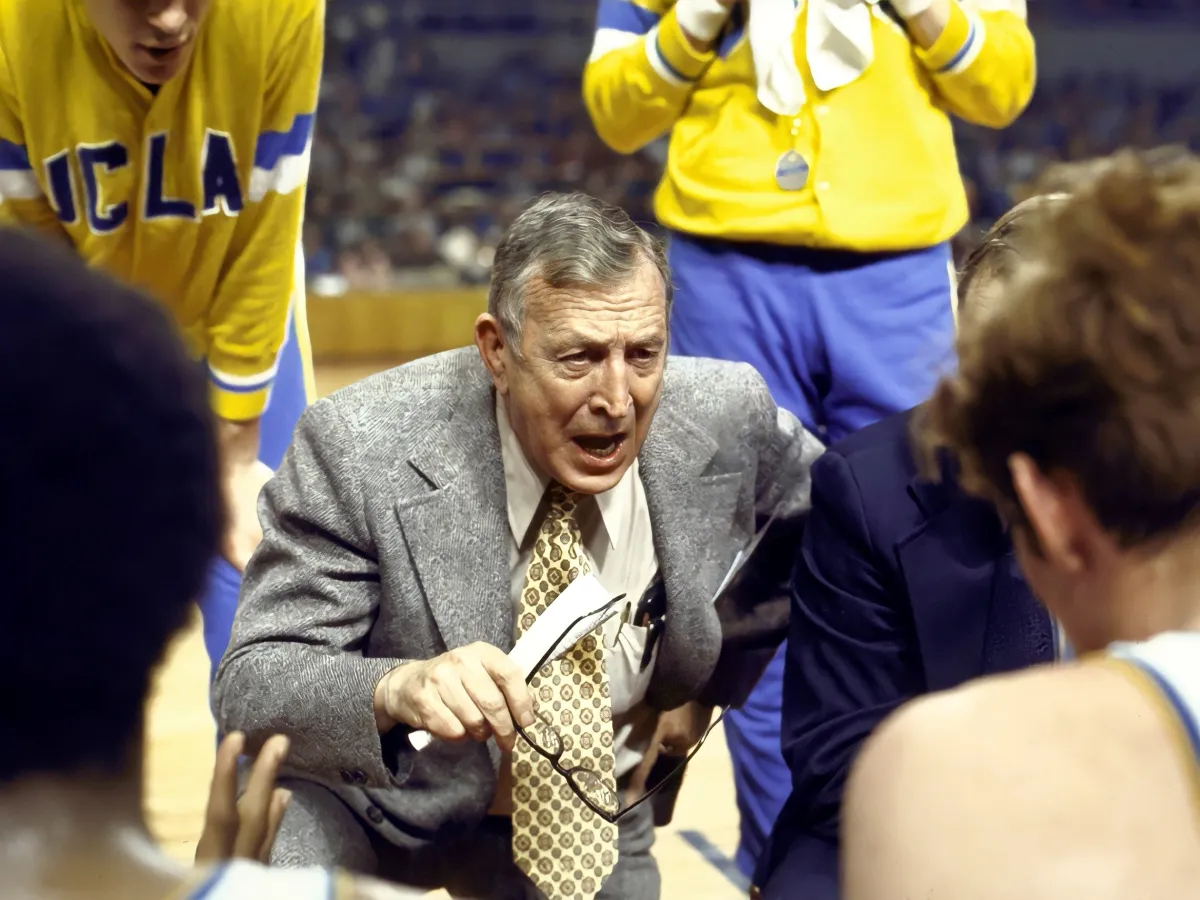 Photo: John Wooden, via achievement.org
Instead, he became the most successful college basketball coach in history.
Wooden's approach to basketball was philosophical rather than athletic. He developed detailed systems for practice organization, player development, and game preparation that treated basketball as an educational process rather than entertainment.
His famous "Pyramid of Success" applied business and educational principles to athletic performance. He emphasized fundamentals over flashiness, preparation over inspiration, and character development over winning at any cost.
Because Wooden had never been a basketball superstar himself, he understood how to teach ordinary players to achieve extraordinary results through discipline, preparation, and systematic improvement. His UCLA teams won ten national championships in twelve years not because they had the most talented players, but because they were the best-prepared and most fundamentally sound.
The Statistician Who Solved Baseball
Bill James never played professional baseball. He worked as a night security guard at a pork and beans cannery in Kansas, spending his quiet hours analyzing baseball statistics with an intensity that bordered on obsession.
James approached baseball as a data problem that could be solved through rigorous analysis rather than traditional scouting wisdom. He questioned everything: whether batting average was a meaningful statistic, whether stolen bases actually helped teams win, whether conventional strategic decisions made mathematical sense.
His "Baseball Abstract" publications, initially photocopied and mailed to a few hundred subscribers, gradually gained influence among general managers and front office executives who were looking for competitive advantages.
James's statistical innovations eventually transformed how professional baseball teams evaluate players, develop strategies, and make personnel decisions. The "Moneyball" revolution that Michael Lewis documented was built on analytical foundations that James had established while working third shift in a Kansas factory.
His outsider status was crucial to his insights. Because he had never been part of baseball's insider culture, he wasn't invested in defending traditional approaches that didn't stand up to statistical scrutiny.
The Mathematician Who Decoded Football Strategy
Bill Walsh played quarterback at San Jose State, but he was never good enough to attract professional interest. He became a graduate assistant coach primarily because he needed a job, not because he harbored dreams of football glory.
Walsh's background in mathematics and education shaped his approach to offensive football. He developed the "West Coast Offense"—a systematic passing attack based on precise timing, route combinations, and mathematical principles rather than individual athletic superiority.
His offensive system treated football as a problem in geometry and probability. He mapped out passing routes with mathematical precision, designed plays that created specific numerical advantages, and developed training methods that emphasized mental preparation over physical conditioning.
The San Francisco 49ers won three Super Bowls under Walsh not because they had the most talented players, but because they had the most sophisticated offensive system. Walsh's analytical approach to football strategy influenced a generation of coaches who adopted his systematic methods.
His success came from applying academic rigor to athletic competition—an approach that was only possible because he viewed football from outside the traditional player-to-coach pipeline.
The Psychologist Who Taught Champions to Think
Tim Grover never played professional basketball. He was a biomechanics researcher who understood human performance from a scientific rather than experiential perspective. When Michael Jordan asked him to design a training program, Grover approached the challenge as a problem in applied psychology and exercise physiology.
Grover's training methods focused on mental conditioning as much as physical preparation. He developed systematic approaches to handling pressure, maintaining focus, and performing consistently under extreme stress. His work with Jordan, Kobe Bryant, and other elite athletes was based on research principles rather than traditional coaching wisdom.
Because Grover had never been an elite athlete himself, he could analyze peak performance objectively without being influenced by personal experiences or conventional beliefs about what worked. His outsider perspective allowed him to identify psychological and physical factors that former players might have taken for granted or overlooked entirely.
The Pattern Behind the Success
These five coaches succeeded precisely because they approached their sports as analytical problems rather than cultural traditions. Their lack of playing experience forced them to understand their sports intellectually rather than intuitively.
They brought systematic thinking to environments that had traditionally relied on inherited wisdom and personal experience. They questioned assumptions that insiders never thought to examine because those assumptions seemed obviously true to people who had grown up within the sport.
Most importantly, they proved that expertise in coaching and expertise in playing are entirely different skill sets. The ability to perform at an elite level doesn't automatically translate into the ability to teach, strategize, or develop other performers.
Their success suggests that the most transformative insights often come from people who are close enough to understand a field's complexities but distant enough to see its blind spots. Sometimes the clearest view of the game comes from outside the stadium entirely.
In a culture that often assumes playing experience is prerequisite for coaching credibility, these outsiders proved that analytical minds and systematic approaches can be more valuable than personal athletic achievements. They didn't just coach their sports—they reimagined what coaching could be.