Before NASA, There Was White Sulphur Springs: How Katherine Johnson's Childhood Built a Mind That Aimed for the Stars
Before NASA, There Was White Sulphur Springs: How Katherine Johnson's Childhood Built a Mind That Aimed for the Stars
Most of what gets written about Katherine Johnson starts with NASA. With the gleaming, high-stakes world of the Space Race, the rows of women bent over calculation sheets in the Langley Research Center, the moment John Glenn refused to board his capsule until "the girl" — his words — had personally verified the computer's numbers.
That's a great story. It's a true story. But it's not where Katherine Johnson's story begins.
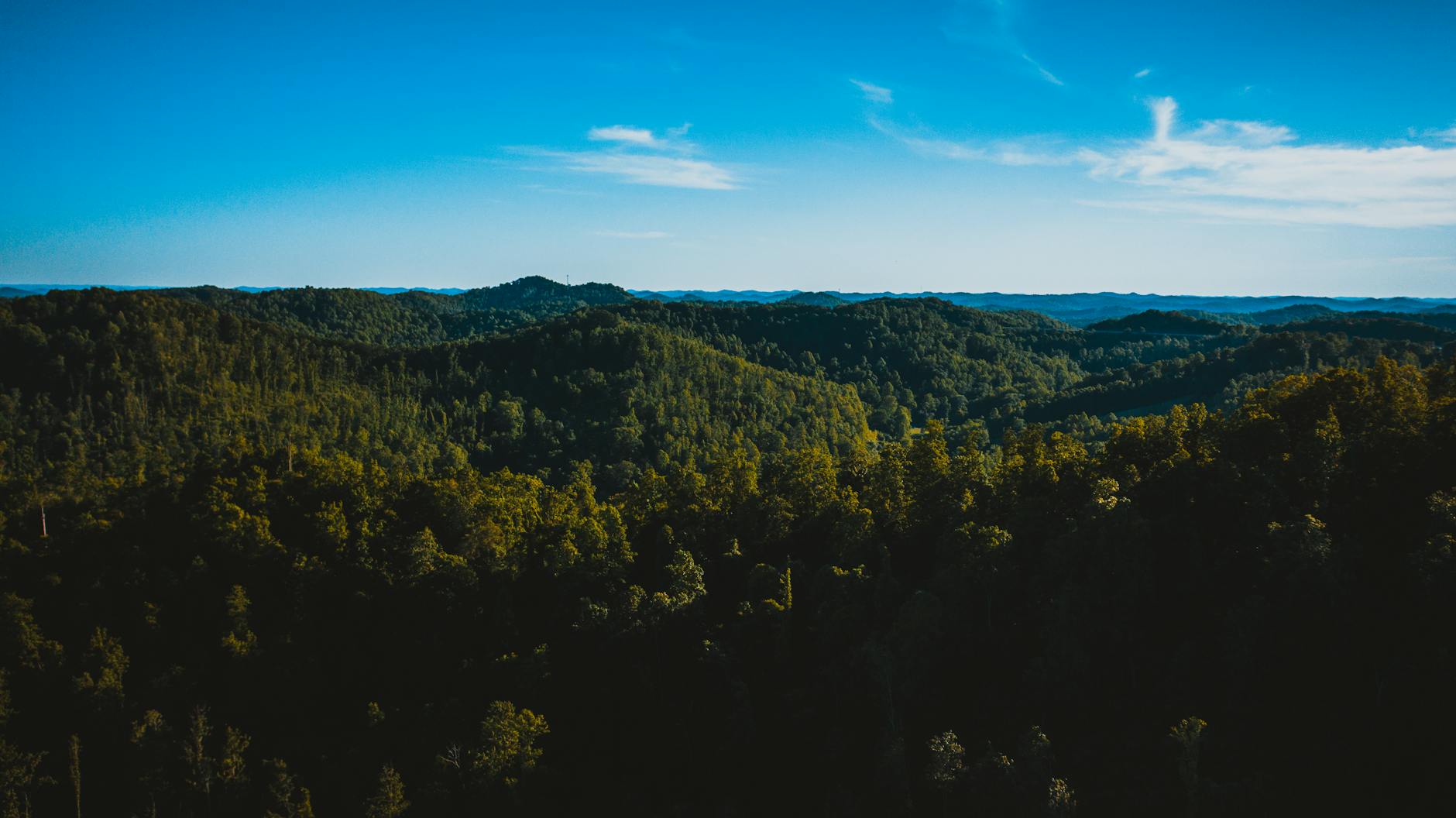
It begins in Greenbrier County, West Virginia. In a small, rural community tucked into the Appalachian hills, in a house with no electricity, in a county where the law said Black children had no school to attend past the eighth grade. It begins, in other words, from nowhere great.
The Counting Girl
Katherine Coleman — she wouldn't become Johnson until her first marriage — was born in 1918 in White Sulphur Springs, a small resort town in the mountains of West Virginia. Her father, Joshua Coleman, worked variously as a farmer, a handyman, and a lumberman. Her mother, Joylette, had been a teacher. Together, they recognized early that their youngest daughter was different.
Katherine counted everything. Steps on the way to church. Dishes being washed. Stars on a clear night. It wasn't a parlor trick — it was how her mind naturally organized the world. Numbers weren't abstract to her; they were the texture of reality itself. By the time she was in elementary school, she was already several grade levels ahead in mathematics, the kind of student who makes teachers quietly rearrange their lesson plans.
But Greenbrier County, in the early 1920s, offered Black children exactly nothing past eighth grade. The state of West Virginia had no mechanism, no infrastructure, and certainly no legal obligation to take Katherine's talent somewhere useful. The road simply ended.
The Decision That Changed Everything
Joshua Coleman made a choice that cost the family significantly. Every year during the school term, he drove Katherine and her siblings 120 miles to Institute, West Virginia — a round trip that consumed time, money, and fuel the family couldn't easily spare — so that they could attend the secondary school associated with West Virginia State College, one of the state's historically Black institutions.
He didn't explain it as sacrifice. He explained it as necessity. "You are as good as anybody in this town," he reportedly told his children, "but you're not better. Now act like it."
That particular combination — unconditional confidence paired with the expectation of discipline — would become the quiet engine of Katherine's life. She enrolled in college at West Virginia State at fifteen. She graduated at eighteen with degrees in mathematics and French. She was, by any measure, a prodigy. But prodigy is only potential. What Katherine Johnson had, in addition to talent, was a framework built in those Appalachian hills: the understanding that preparation was non-negotiable, that precision was a form of respect, and that no obstacle was worth using as an excuse.
What Rural Life Teaches That Classrooms Don't
There's something specific about growing up in a resource-scarce environment that shapes how people solve problems — and it's not romantic, exactly, but it's real.
When you grow up without electricity, you learn to work with what you have. When your community has been systematically denied access to institutions, you learn to build your own systems of verification — to double-check, triple-check, trust your own work because there's no safety net beneath you. When the road to opportunity literally requires someone driving you 120 miles each way, you understand in your bones that nothing is simply handed over.
Katherine Johnson internalized all of this before she ever set foot in a federal building. Her precision wasn't just mathematical — it was personal. It was the precision of someone who had learned early that the margin for error in her world was smaller than it was for other people, and that the only response to that fact was to make your work bulletproof.
Langley and the "Human Computers"
She came to NASA's predecessor — the National Advisory Committee for Aeronautics — in 1953, initially assigned to a pool of Black female mathematicians who were officially segregated from their white counterparts. They worked in a separate building. They used a separate cafeteria. The sign on their bathroom door read Colored Computers.
Katherine Johnson did not accept the limitations of that arrangement quietly. She started attending briefings that women — and Black employees — weren't supposed to attend, reasoning simply that no one had explicitly told her she couldn't. When asked about it later, she was characteristically direct: "I just went."
She asked questions nobody else was asking. She requested — and eventually demanded — to be credited as an author on research reports, a recognition that had never been extended to the women in her unit. She got it. She calculated the trajectory for Alan Shepard's 1961 mission, the first American in space. She calculated the launch window for the 1969 Apollo 11 mission that put Neil Armstrong on the moon.
And then there was John Glenn.
"Get the Girl to Check the Numbers"
By 1962, NASA had installed electronic computers — IBM machines that could theoretically handle the complex orbital calculations for Glenn's Friendship 7 mission far faster than any human. Glenn, famously, didn't fully trust them. Before he would agree to get in the capsule, he asked that Katherine Johnson personally verify every number the computer had produced.
She did. They matched. He flew.
The anecdote has become the most-told moment of her biography, and it deserves its place. But what it really illustrates isn't just Johnson's skill — it's the weight that had been placed on her accuracy her entire life. She had been doing bulletproof work since she was a girl in West Virginia making do with less than everyone around her. Glenn's request wasn't a surprise. It was, in a way, the world finally acknowledging what had always been true.
The Long Recognition
Katherine Johnson received the Presidential Medal of Freedom in 2015, at age 97. The film Hidden Figures, released in 2016, introduced her to a generation that had never heard her name. NASA named a building after her. A biography was written. The honors came in a cascade, late but genuine.
She died in 2020 at 101, having lived long enough to see the recognition arrive.
But the foundation of everything she did — the precision, the persistence, the refusal to accept the limits other people drew around her — wasn't built at Langley. It was built in Greenbrier County, on a dirt road in the Appalachian hills, in a house without electricity, by a girl who counted the stars and a father who drove 120 miles so she'd have somewhere to aim.