Rocket Boy: How a Coal Miner's Son Taught Himself to Touch the Sky
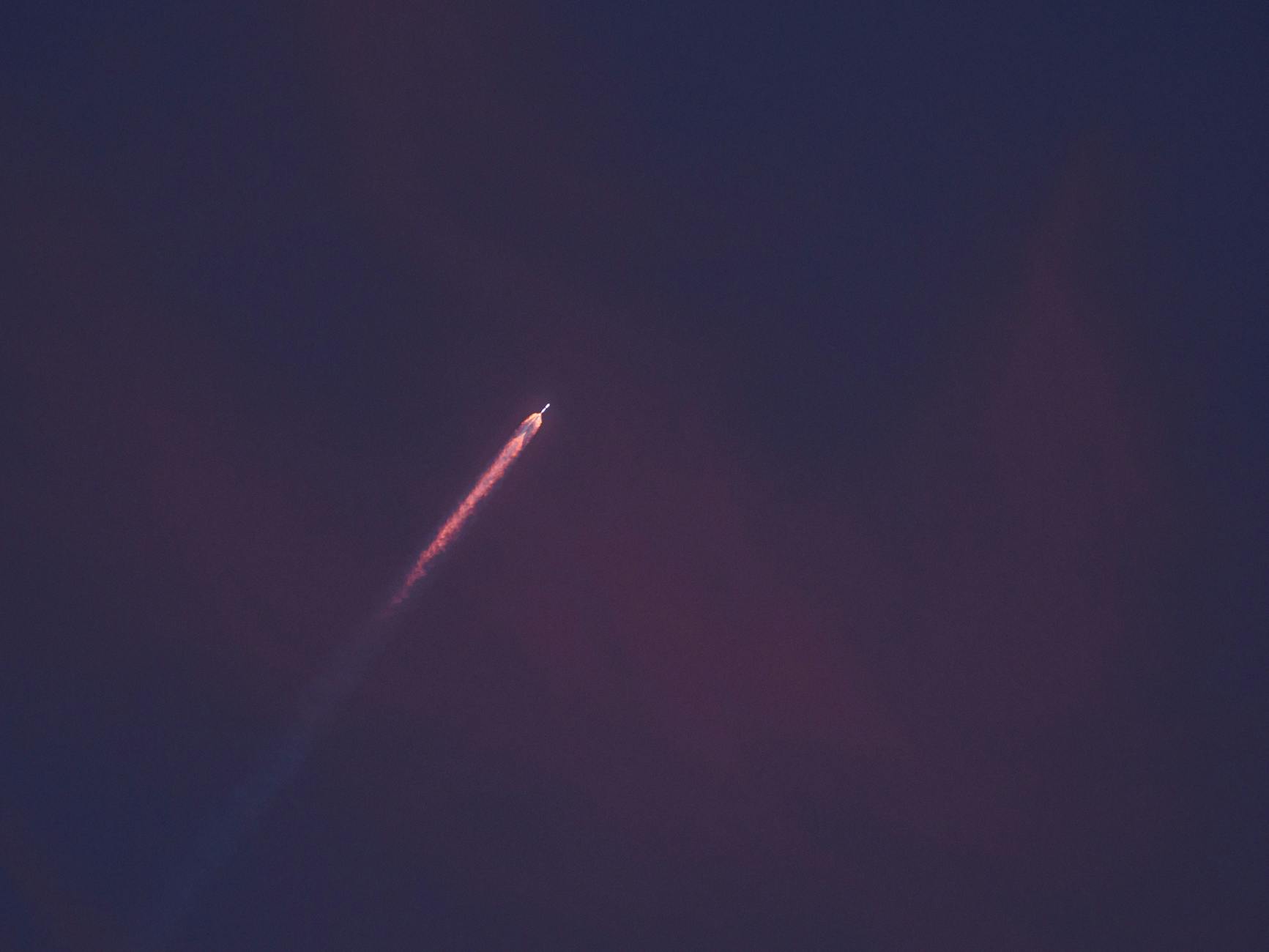
Rocket Boy: How a Coal Miner's Son Taught Himself to Touch the Sky
Coalwood, West Virginia, didn't have a lot of use for dreamers.
It had a mine. It had miners. It had the sons of miners, who would become miners themselves, and the daughters of miners, who would marry them. The Olga No. 1 coal mine was the town's reason for existing — the company owned the houses people lived in, the store where they bought groceries, even the church where they prayed on Sundays. The whole town was essentially a company asset. And in 1957, that felt permanent.
Then Sputnik beeped its way across the night sky, and a fifteen-year-old named Homer Hickam looked up.
The Night Everything Changed
When the Soviet Union launched the world's first artificial satellite in October 1957, most Americans felt a chill of Cold War dread. Homer felt something else entirely. He watched that tiny blinking light arc overhead and thought — I want to do that.
Not vaguely. Not the way a kid says he wants to be an astronaut before moving on to wanting to be a cowboy. Homer Hickam decided, with the kind of stubborn clarity that either ruins people or saves them, that he was going to build rockets.
In Coalwood. With no money, no equipment, no mentor who knew anything about propulsion, and a father who very much expected his son to follow him underground.
What happened next is one of those stories that sounds made up precisely because real life so rarely cooperates this neatly with a good narrative. But it happened. Every stubborn, improbable bit of it.
Library Books and Borrowed Chemistry
Homer's first rockets were disasters. Spectacular, dangerous, occasionally fence-destroying disasters. He and a small group of friends — who called themselves the Big Creek Missile Agency, with the kind of earnest grandiosity only teenagers can pull off — blew up his mother's rose garden on their first attempt. The town was not impressed.
But Homer had found something crucial: Principles of Guided Missile Design, a technical manual so far beyond his current education that he essentially had to teach himself the underlying math just to understand it. He did. Page by page, problem by problem, with a chemistry teacher named Freida Riley who recognized something in him and pushed him harder than he probably wanted to be pushed.
There's something worth sitting with there. Homer Hickam didn't have a rocket scientist in his family, or a university nearby, or a mentor who'd ever left West Virginia. What he had was a library, a supportive teacher, and a refusal to accept that the ceiling above Coalwood was the ceiling above him.
He wrote letters to scientists. He actually got responses. He modified his designs, improved his fuel mixtures, and kept launching — eventually achieving enough altitude and precision that the Big Creek Missile Agency entered (and won) the National Science Fair in 1960.
The Weight of Where You're From
It would be easy to frame Homer's story as a simple escape narrative — small-town kid gets out, makes good, never looks back. But that flattens something important.
His father, Homer Sr., was the mine superintendent. He was a respected, capable man who genuinely loved Coalwood and believed in its future. The tension between father and son wasn't villain versus hero. It was two people who loved each other, shaped by completely different ideas about what a life could look like.
Homer Sr. wanted his son to have a solid, real future. Homer Jr. wanted something his father couldn't quite see yet. That friction — between the world as it is and the world as someone dares to imagine it — is what makes this story feel less like a feel-good movie and more like actual human experience.
(It did eventually become a feel-good movie, for the record. October Sky, released in 1999, starred Jake Gyllenhaal as Homer and is still one of the better biographical films about American ambition.)
From Coalwood to Cape Canaveral
Homer went to Virginia Tech on a scholarship he earned himself, served as an Army officer in Vietnam, and eventually landed exactly where that fifteen-year-old had aimed: NASA's Marshall Space Flight Center in Huntsville, Alabama.
He trained astronauts. He worked on payload projects. He became, in the most literal sense, a person whose job was to think about outer space — a job that did not exist in Coalwood, had never existed in Coalwood, and that nobody in Coalwood had ever held before him.
After retiring from NASA, he wrote Rocket Boys, the memoir that became October Sky, and then kept writing — military thrillers, more memoirs, books about scuba diving. Because apparently once you decide that limits are optional, you just keep going.
What Coalwood Actually Gave Him
Here's the part that gets overlooked in the inspirational retelling: Coalwood made Homer Hickam.
Not despite being a coal town, but partly because of it. Growing up in a place with no blueprint for what he wanted to do forced him to build his own. The absence of a clear path meant he had to construct one from scratch — from library books and failed launches and letters to strangers and a chemistry teacher who believed in him.
There's a particular kind of resilience that comes from having to figure everything out yourself. From not having a network, or a legacy, or a roadmap. From being, as this site likes to put it, from nowhere great.
The mine closed in 1986. Coalwood barely exists as a functioning town anymore. But every year, people make a kind of pilgrimage there — to see where the rockets launched, to stand in the field where a kid once aimed at the stars and, against every reasonable expectation, actually got there.
Some places produce greatness not by offering everything, but by offering almost nothing — and trusting someone stubborn enough to build the rest.