The Woman Who Burned Water
Julia Child was spectacularly bad at cooking. Not just inexperienced—actively dangerous in the kitchen. She once set fire to a chicken while trying to roast it. She regularly burned rice. Her attempts at scrambled eggs were, by her own admission, "gray and rubbery disasters."
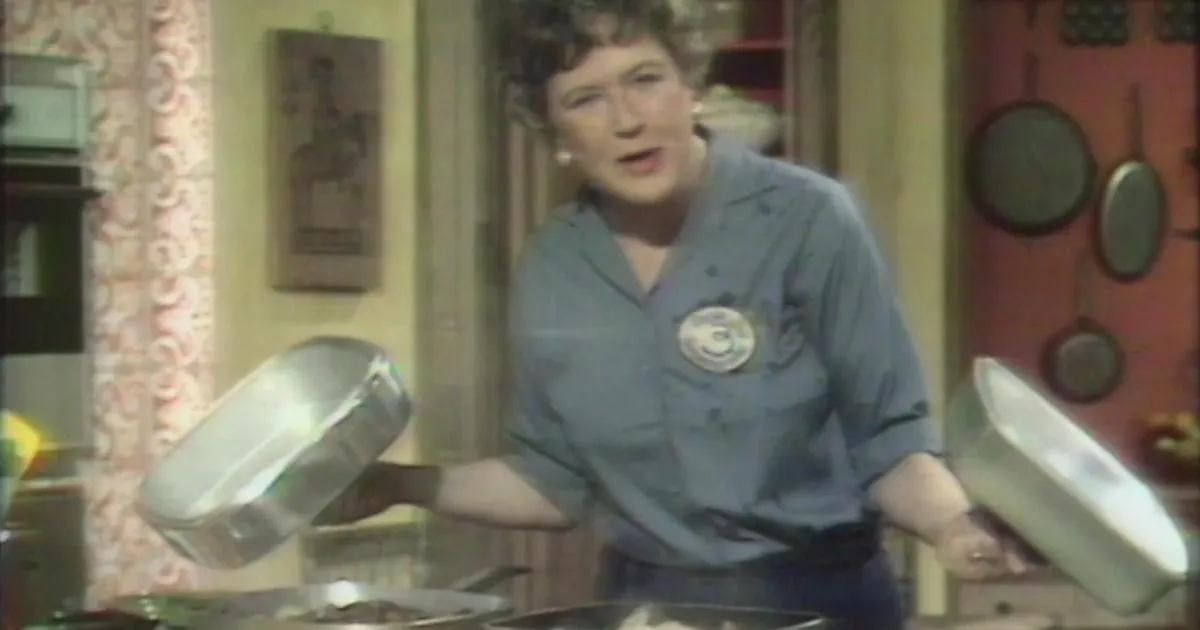 Photo: Julia Child, via image.pbs.org
At 36, married to a cultured diplomat who appreciated fine food, Child had somehow avoided learning even the basics of cooking. She was six feet two inches tall in an era when women were expected to be petite and domestic. She had spent her twenties working for the Office of Strategic Services during World War II, developing shark repellent and organizing resistance networks—not exactly traditional preparation for a life in the kitchen.
When her husband Paul was stationed in Paris in 1948, Child found herself in the world's culinary capital with the cooking skills of a particularly incompetent teenager.
It should have been a disaster. Instead, it became the beginning of the most influential food career in American history.
The Lunch That Changed Everything
Child's transformation began with a single meal at La Couronne, a restaurant in Rouen. She ordered sole meunière, oysters, and white wine—simple dishes that revealed flavors she had never imagined food could possess. "I was hooked," she later wrote, "and for life, as it turned out."
That lunch didn't just introduce her to French cuisine; it showed her what she had been missing her entire life. American food in the 1940s was largely about convenience and conformity. Casseroles from cans. Vegetables boiled into submission. Flavors muted and safe.
French cooking was the opposite of everything Child had known: bold, technical, unforgiving, and absolutely delicious.
The Student Who Wouldn't Quit
Most people would have taken a few cooking classes and called it a hobby. Child threw herself into French culinary education with the intensity of someone making up for lost time. She enrolled at Le Cordon Bleu, the prestigious cooking school that had trained professional chefs for decades.
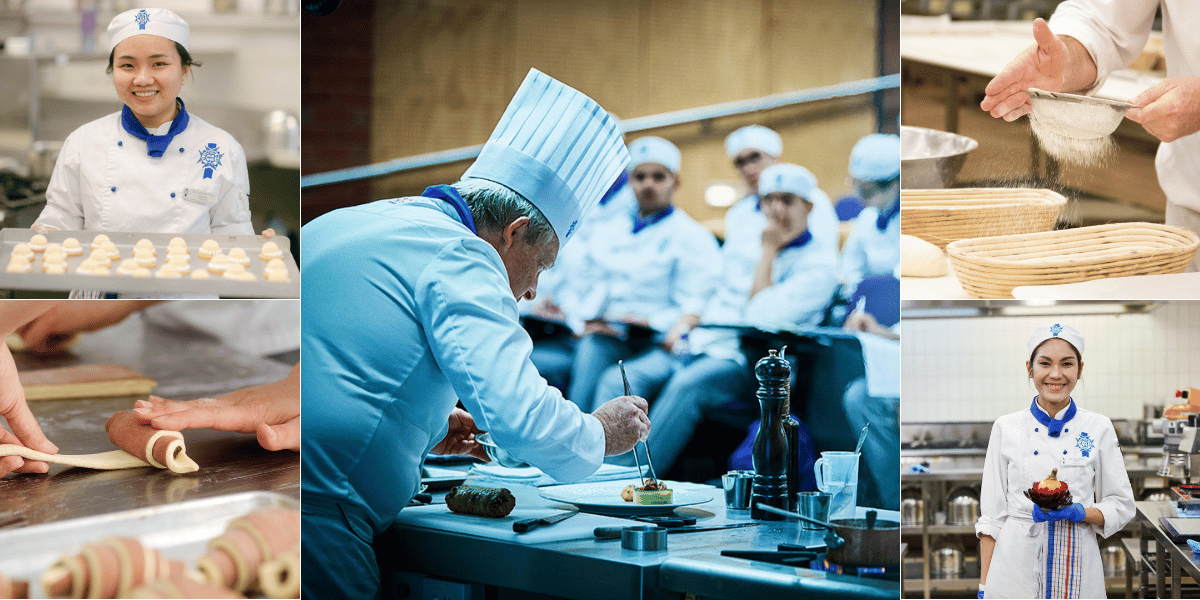 Photo: Le Cordon Bleu, via static.cordonbleu.edu
The school initially tried to place her in the housewife class—a dumbed-down version designed for diplomatic wives who wanted to learn a few party tricks. Child refused. She demanded admission to the professional program, despite having no experience and being older than most serious culinary students.
The instructors were skeptical. A tall American woman who couldn't properly hold a knife, insisting on learning techniques that took French students years to master? It seemed like a recipe for frustration and failure.
They underestimated her capacity for both.
The Art of Learning Everything Wrong
Child's approach to cooking education was methodical to the point of obsession. She didn't just learn recipes; she dissected them. She practiced basic knife cuts for hours until her fingers bled. She made the same sauce dozens of times, noting every variable that affected the outcome.
Her lack of natural talent became an asset. Because nothing came easily to her, she had to understand the science behind every technique. She couldn't rely on intuition or inherited knowledge—she had to build her understanding from the ground up, one burned hollandaise sauce at a time.
Her height, which made her self-conscious in social situations, proved advantageous in professional kitchens. She could reach high shelves and work comfortably at counters designed for tall chefs. Her wartime experience with complex logistics helped her organize elaborate meals.
Most importantly, her late start meant she approached cooking without preconceptions. She wasn't trying to replicate her mother's recipes or honor family traditions. She was discovering food as an adult, with an adult's analytical mind and an adult's appreciation for complexity.
The Book Nobody Wanted
Child's education led to collaboration with two French cooking teachers, Simone Beck and Louisette Bertholle, on a comprehensive cookbook for American kitchens. Their goal was ambitious: to teach Americans not just French recipes, but French cooking techniques.
The project took nearly a decade. Child tested every recipe in her own kitchen, adapting measurements for American ingredients and equipment. She wrote detailed explanations of techniques that French cookbooks assumed readers already knew. She anticipated every possible mistake an inexperienced cook might make because she had made them all herself.
Publishers weren't interested. American cookbooks were supposed to be simple, quick, and foolproof. Child's manuscript was dense, demanding, and honest about the time and effort good cooking required. It was 734 pages long in an era when most cookbooks were pamphlets.
Knopf finally published "Mastering the Art of French Cooking" in 1961, with modest expectations and a small print run.
The Revolution Nobody Saw Coming
The book became a phenomenon precisely because it treated readers as intelligent adults capable of learning complex skills. Child didn't condescend or oversimplify. She explained why techniques worked, what could go wrong, and how to fix mistakes.
American home cooks, tired of bland convenience foods and simple recipes, embraced the challenge. Child's television appearances—initially disasters where she dropped turkeys and spilled wine—showed viewers that cooking mistakes weren't catastrophic. They were learning opportunities.
Her approach to cooking education was revolutionary: she taught people to think like cooks, not just follow recipes. She demonstrated that culinary skills were learnable, that good food was worth the effort, and that failure was part of the process.
The Late Bloomer's Advantage
Child's late start wasn't a disadvantage—it was the secret to her success. Because she learned to cook as an adult, she understood adult learning. She knew what questions beginners really had because she had been a beginner herself, recently and memorably.
Younger cooking teachers often struggled to explain techniques that felt intuitive to them. Child remembered exactly how confusing it felt to not know whether butter should be cold or room temperature, or why some sauces broke and others didn't.
Her failures became her teaching material. Every mistake she made informed her instruction. Every technique she struggled with became a detailed explanation in her books and television shows.
The Teacher Who Learned First
By the time Child died in 2004, she had fundamentally changed American food culture. She had introduced millions of people to the idea that cooking was a craft worth learning well. She had shown that good food required technique, patience, and practice—and that all three were within reach of ordinary people.
Her influence extended far beyond recipes. She taught Americans to approach food with curiosity rather than fear, to see cooking as creative expression rather than domestic drudgery, and to understand that the best meals often came from the biggest risks.
Most importantly, she proved that starting late, starting badly, and starting with no natural talent didn't disqualify anyone from mastery. It just meant taking a different path to get there.
Child's story suggests that the best teachers are often the ones who learned the hard way, who remember what it feels like to not understand, who can bridge the gap between expertise and ignorance because they've stood on both sides.
Sometimes the most powerful education comes from someone who figured it out themselves, one magnificent failure at a time.