The Basement That Changed Everything
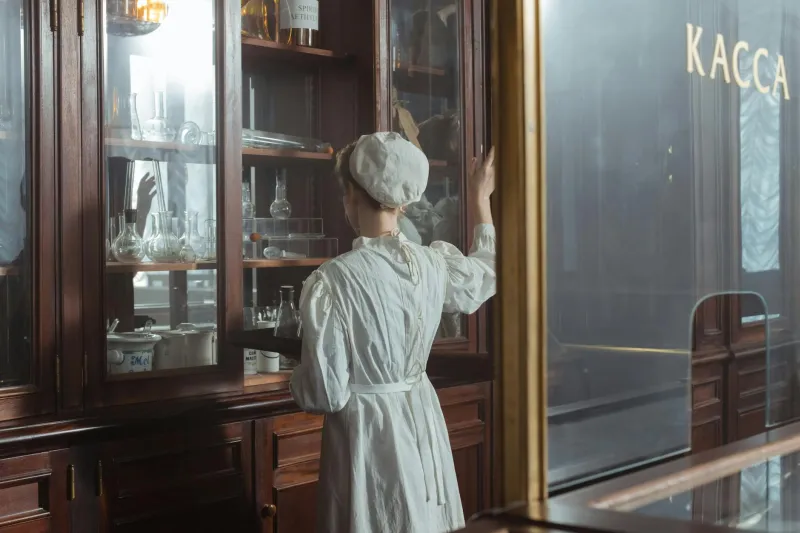
In 1943, while most of America was focused on winning a war overseas, Dr. Charles Drew was fighting a different kind of battle in a converted church basement in Washington, D.C. The space was cramped, poorly ventilated, and equipped with secondhand equipment that white medical schools had discarded. But it was here, in conditions that would have shut down any "proper" research facility, that Drew perfected the techniques for separating and storing blood plasma that would save countless lives on both the battlefield and in civilian hospitals.
Drew's story isn't unique—it's emblematic. Across the Jim Crow South and in the segregated North, Black scientists were making breakthrough discoveries in spaces that weren't supposed to produce breakthroughs. They worked in borrowed labs after hours, in underfunded Black colleges, and in makeshift facilities that white institutions wouldn't have used for storage. Yet somehow, these "inferior" conditions produced some of the most important medical advances of the 20th century.
When Exclusion Breeds Innovation
Dr. Percy Julian knew exactly what it felt like to be brilliant in a world that didn't want his brilliance. Born in Montgomery, Alabama, in 1899, Julian wasn't allowed to attend high school—Alabama didn't provide public secondary education for Black students. So he taught himself enough to test into DePauw University in Indiana, where he graduated first in his class.
But even a perfect academic record couldn't buy Julian access to graduate programs at major universities. Harvard accepted him for graduate work, then suggested he might be "more comfortable" elsewhere when they realized he was Black. He eventually earned his PhD from the University of Vienna, but when he returned to America, no major pharmaceutical company would hire him.
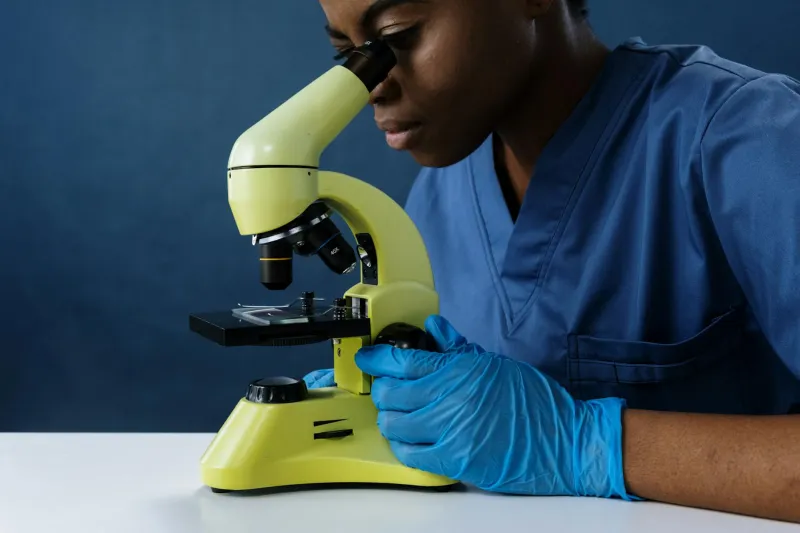
So Julian did what excluded people often do: he improvised. Working in a tiny lab at DePauw with equipment he'd built himself, Julian began synthesizing compounds that major pharmaceutical companies insisted were impossible to produce artificially. His synthesis of physostigmine led to treatments for glaucoma. His work with steroids from soybean oil made cortisone affordable for the first time, revolutionizing treatment for arthritis and other inflammatory conditions.
By the time Glidden Company finally hired Julian in 1936, he had already solved problems that teams of well-funded researchers at major universities couldn't crack. The basement lab hadn't limited his thinking—it had liberated it.
The Night Shift Revolutionary
Dr. Jane Cooke Wright's path to medical greatness began in the most unlikely place: the night shift at Harlem Hospital's cancer ward in the 1940s. Wright, daughter of one of the first Black graduates from Harvard Medical School, could have followed a conventional path. Instead, she found herself working the graveyard shift, treating patients that other doctors had given up on.
It was during those long nights, with minimal supervision and even less funding, that Wright began experimenting with something radical: using chemotherapy drugs to treat solid tumors, not just blood cancers. The medical establishment considered this approach futile, even dangerous. Solid tumors, they insisted, were immune to chemical treatment.
Wright didn't have access to the latest research or the newest equipment. What she had was time, determination, and patients who were willing to try anything. Working with whatever drugs she could obtain, she began developing protocols for treating breast cancer, lung cancer, and skin cancers with combinations of chemotherapy agents.
By the early 1950s, Wright's "experimental" treatments were producing survival rates that embarrassed the major cancer centers. She had essentially invented modern oncology in a Harlem hospital room, working nights because that's when she could get access to the patients and equipment she needed.
The Mathematics of Making Do
What connected Drew, Julian, and Wright wasn't just their race or the barriers they faced—it was their approach to limitation. When you can't get the best equipment, you learn to make the equipment you have work better. When you can't access the latest research, you develop your own methods. When you're excluded from the networks that share information, you become incredibly good at independent thinking.
This wasn't just individual brilliance overcoming systemic racism—though it was certainly that. It was also a different kind of scientific method, one born of necessity but applicable far beyond the circumstances that created it. These scientists learned to question everything, to build from first principles, and to see possibilities that well-funded, well-connected researchers missed.
Drew's blood storage techniques were so effective because he had to make them work with unreliable refrigeration and limited supplies. Julian's synthetic chemistry was so innovative because he couldn't afford to waste materials on failed experiments. Wright's cancer treatments were so successful because she had to find solutions that worked with whatever drugs she could obtain.
The Credit Where Credit Isn't Due
Here's the part of the story that should make America uncomfortable: these discoveries didn't just happen in isolation. They were absorbed, refined, and repackaged by institutions that often never acknowledged their origins. Drew's blood banking techniques became standard practice in American hospitals, but his name disappeared from the medical textbooks. Julian's synthetic chemistry patents were purchased by major pharmaceutical companies that made billions while Julian remained unknown to the general public. Wright's chemotherapy protocols became the foundation of modern cancer treatment, but the credit went to researchers at more prestigious institutions.
This wasn't accidental erasure—it was systematic. The same institutions that had excluded these scientists from their laboratories were happy to profit from their innovations, as long as the credit could be reassigned to more "appropriate" sources.
What We're Still Missing
The story of Drew, Julian, and Wright isn't just historical curiosity—it's a blueprint for understanding how innovation actually works. The places we think are most likely to produce breakthroughs—well-funded labs, prestigious universities, major research institutions—often produce incremental improvements to existing knowledge. The real leaps forward come from people who are forced to think differently, who can't rely on conventional wisdom because conventional wisdom has never included them.
Today, when we talk about diversity in STEM fields, we often frame it as a matter of fairness or representation. But the story of these three scientists suggests something more fundamental: exclusion doesn't just hurt the people who are excluded. It impoverishes the entire enterprise of discovery.
The basement labs of Jim Crow America produced medical advances that saved millions of lives. Imagine what we might discover if we stopped building barriers and started building more basements—spaces where excluded voices could work without permission, think without supervision, and innovate without apology.
Sometimes the wrong side of the tracks is exactly where history needs to be made.